Can a Super El Nino save Colorado from deepening drought conditions?
El Nino conditions tend to mean wetter summers and falls for Colorado, something the state desperately needs

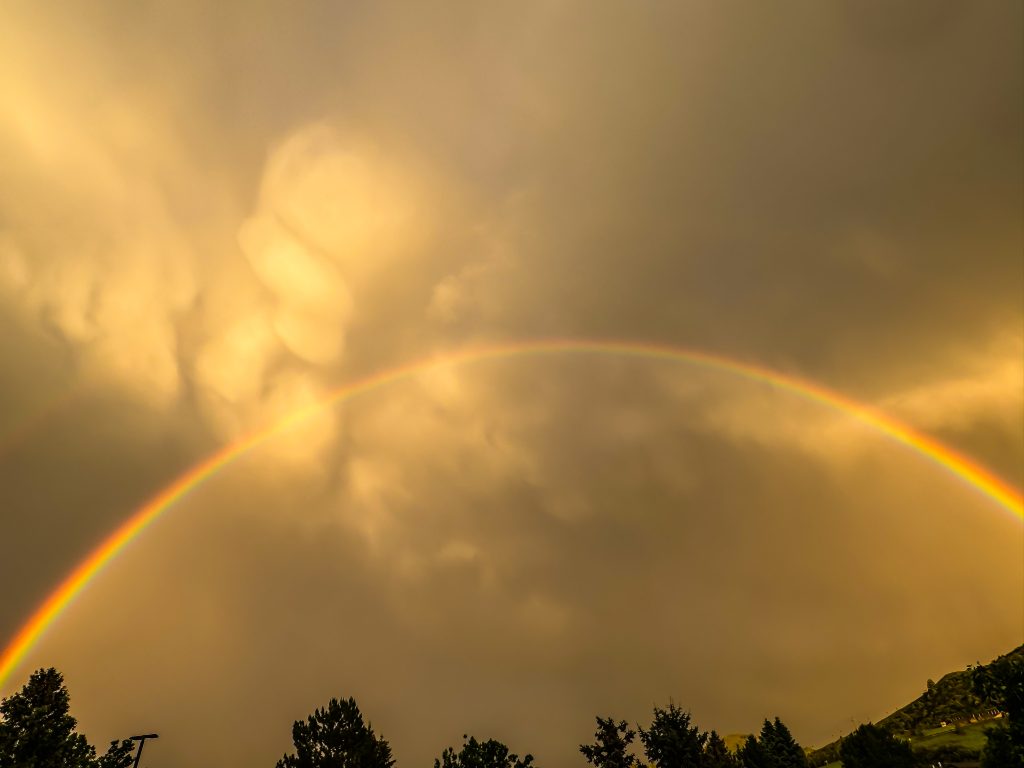
Chris Dillmann/Vail Daily archive
Not even a Super El Nino — which climatologists say is likely to develop this summer — could undo the damage in Colorado after a historically low snowpack. It may, however, offer a glimmer of hope that relief is on its way.
“Overall, between the very low snowpack and the warm, dry winter and start to spring …. we are in drought conditions across basically the entire state, and they, at this time, are worsening,” said Peter Goble, the assistant state climatologist at the Colorado Climate Center, said at the monthly Colorado Water Conditions Monitoring Committee meeting on Tuesday, April 21. “But this is probably the most optimistic seasonal outlook that I’ve been able to give on one of these calls in quite some time.”
El Nino and its inverse La Nina are two phases of a climate cycle related to abnormal changes in ocean temperature. When temperatures in the tropical Pacific Ocean are warmer than average, it results in El Nino conditions. When temperatures are cooler than average, La Nina is the result. The ocean temperatures can drive different weather patterns across the world. Historically, El Nino conditions bring wetter summers and falls but drier than normal winters in the Northern Rockies.
However, Goble likens the weather predictions associated with La Nina and El Nino to a game of poker.
“It’s like playing poker with a few extra Aces and Kings in the deck,” he said. “The odds may be stacked in your favor, but you could still draw a crummy hand.”
The 2025-26 winter offers the perfect example. Typically, in La Nina winters, the Northern Rocky Mountains tend to see above-normal precipitation.
“We had a weak La Nina over the last winter, and it was obviously much drier than normal, for many record dry,” Goble said.

Now, the cooler ocean temperatures that brought La Nina this winter are officially gone.
“Just off the coast of South America, you can see warmer than normal sea surface temperatures developing there,” Goble said. “It’s likely that this is going to grow into an El Nino event, and it might be a big one.”
The International Research Institute for Climate and Society reports a near 70% likelihood that El Nino will develop between April and June, and an 88-94% likelihood it will stick around for the remainder of 2026.
This summer, sea temperatures are projected to be 2 degrees Celsius above normal — the threshold for climatologists to crown it a “Super El Nino.”
Goble said that while there is “nothing magical about the 2 degrees Celsius threshold, where if we tip into super, it’s going to suddenly do something amazing,” there are some indications that “the stronger the El Nino, the higher precipitation may be.”
“The more pronounced the pattern, the closer we can be to being confident in some of these effects on precipitation,” he added.
According to Goble, there are three Super El Ninos on record in Colorado. This includes 1983 and 1998, which were “very good snow years” and 2016, which was an “average snow year,” he said.
“Overall, I don’t think we’re looking out quite that far yet,” Goble added. “For this summer, it does help our odds of a wetter than normal summer.”

While the latest National Weather Service forecasts show an increased probability of above-normal temperatures in Colorado from July to September, precipitation outlooks are creeping back toward normal or slightly above normal for the summer months.
This move to El Niño coincides with forecasts showing a strong possibility that Colorado will see an active monsoon season, according to Goble.
The North American Monsoon is driven by a shift in wind patterns that brings continuous moisture from the Gulf of California to the southwestern United States, including Colorado. It typically kicks off in July and extends through August, and can bring consistent afternoon rain and thunderstorms.
However, these more “optimistic” long-term outlooks come as 98% of Colorado is experiencing some kind of drought. Over half of the state (54%) is experiencing severe to exceptional drought conditions, according to the latest U.S. Drought Monitor. Conditions are the worst in northwest Colorado.
“This is an area where not only has winter snowpack been at record lows, but last summer was also critically warm and dry,” Goble said.

While April brought some “decent moisture” to the Western Slope, Goble said it did little to “change the big picture narrative of the winter season in western Colorado.”
Whatever moisture comes this spring and summer, however, is unlikely to reverse the impacts of this winter’s historically low snowpack and record hot temperatures.
“When it comes to our water supply, I think that the damage is already done,” Goble said. “A wet summer would be much better for our water supplies than a dry one — (it) reduces irrigation demand, helps with fire suppression (and) potential marginal boosts to storage. However, we don’t capture nearly as high a fraction of our summer moisture in our lakes, streams and reservoirs as we do our winter moisture.”
Regaining the losses incurred at Colorado’s large reservoirs like Lake Dillon, Blue Mesa Reservoir and Lake Granby is “highly unlikely” this summer, Goble said, adding that it “would take disastrous flooding to do so.”
Still, if forecasts hold and Colorado sees above normal precipitation this summer, “we would certainly take it,” he added.
Colorado’s grim outlook for streamflows and wildfire season this summer has the state, local water providers and municipalities introducing plans and restrictions to guard limited water resources this summer
Colorado Gov. Jared Polis activated the state’s drought task force in March, which will help coordinate a response to the worsening conditions. Local water providers and municipalities are already introducing restrictions to guard limited water resources this summer. This has included declarations and drought restrictions across the Western Slope, including those from the Vail-area water district, the city of Steamboat Springs and the Mt. Werner Water and Sanitation District, Grand County and the towns of Basalt, Yampa, Frisco and Kremmling.

Support Local Journalism
Support Local Journalism
As a Summit Daily News reader, you make our work possible.
Summit Daily is embarking on a multiyear project to digitize its archives going back to 1989 and make them available to the public in partnership with the Colorado Historic Newspapers Collection. The full project is expected to cost about $165,000. All donations made in 2023 will go directly toward this project.
Every contribution, no matter the size, will make a difference.