Jared Polis sets goal of cutting average home insurance costs by $800 annually by end of 2027
Colorado ranks as the 6th most expensive state for property insurance

Robert Tann Follow
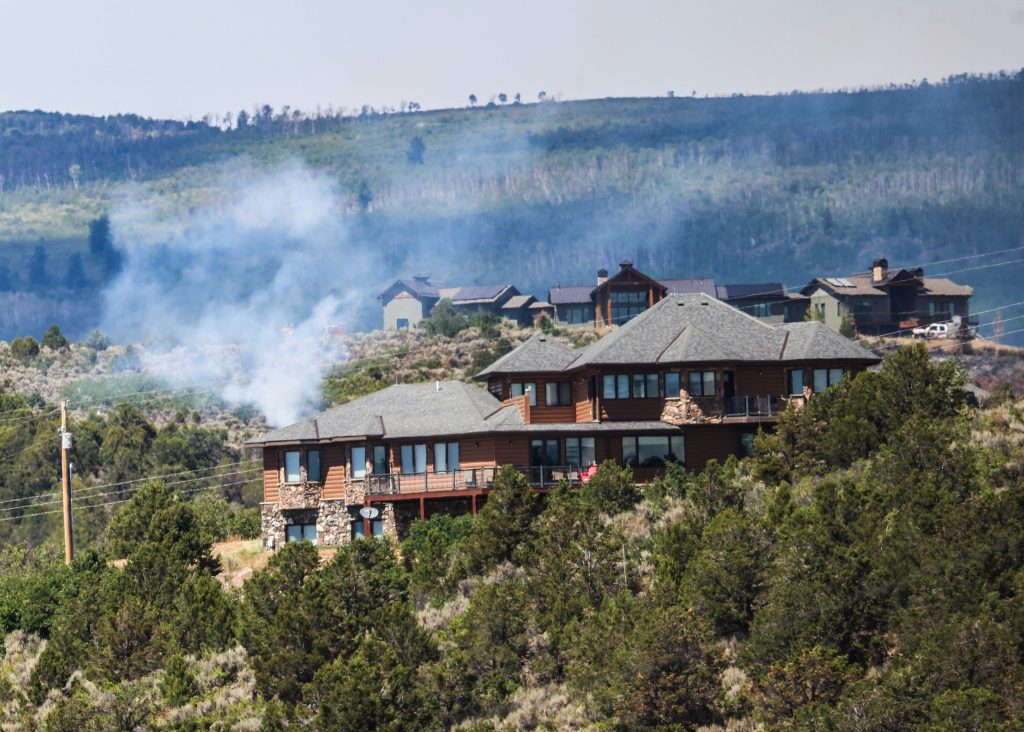
Austin Colbert/The Aspen Times
Colorado Gov. Jared Polis said he wants to reduce average homeowners insurance premiums by about $800 annually by the end of next year.
The goal, which Polis hopes to achieve through a mix of legislative and executive action, comes in response to a dramatic rise in homeowners insurance costs. Average premiums more than doubled between 2018 and 2023, and Colorado ranks as the sixth-costliest state for homeowners insurance, according to a Colorado State University report.
“It’s really unacceptable,” Polis said during a Thursday, April 23 press conference. “As we look at the cost of living and we talk about the cost of housing — of course it’s the cost of your rent and mortgage — but it’s also the cost of your homeowners insurance, and the premium increases in Colorado have simply been too high.”
Much of Polis’ plan is built on legislation that has already been passed to drive down insurance costs and provide a safety net to homeowners. That includes the Fair Access to Insurance Requirements, or FAIR Plan, which serves as an insurer of last resort that provides coverage for homes valued up to $750,000 for owners who can’t find insurance on the private market.
Another measure passed last year, House Bill 25-1182, requires more transparency from insurance carriers on how they assess a homeowner’s wildfire risk, with provisions aimed at ensuring homeowners receive discounted rates for mitigation work. That legislation goes into effect on July 1.
This year, lawmakers are also advancing Senate Bill 155, which is modeled after a 2025 bill that failed to pass. SB 155 seeks to raise up to $20 million per year for a grant fund that would help homeowners pay to install hail-resistant roofs, with the money coming from a 0.5% fee on insurance carriers’ plans. Carriers would be prohibited from passing that fee onto customers as a surcharge, according to the bill’s language.
Polis said focusing on hail is especially important for lowering insurance rates.
A study by the Colorado Division of Insurance released in February found that hail can account for anywhere from 26% to 54% of a premium’s costs, while wildfire accounts for as little as 0.9% to 24.6%.
Polis said his plan will also be achieved through administrative actions. That includes directing the state’s Division of Fire Prevention and Control to help local jurisdictions adopt wildfire resilience codes for new homes, bolstering fire detection, modeling and forecasting services, and making insurers more aware of Colorado’s mitigation efforts through data sharing.

The high cost of home insurance is manifesting in all types of housing situations, Polis said.
In mountain resort areas, homeowners association fees for condominium complexes have exploded in recent years, driven largely by an increase in insurance premiums.
Colorado Insurance Commissioner Mike Conway said the legislation passed last year to address price transparency also applies to condominium complexes, not just single-family homes.
The legislation did not include penalties for insurers who don’t comply, but it does allow homeowners to appeal their risk assessment to their carrier. The state plans to launch an education campaign this summer to make homeowners aware of their rights under the new law.
Conway said insurers will also be required to file their models with the state and show that wildfire mitigation is being accounted for.
“We have a plethora of enforcement authority already in existing law,” Conway said.
Polis said if companies are not giving credit for mitigation efforts in their rates, he would direct the state’s insurance division to prevent those carriers from selling plans in Colorado. The insurance division has the ability to block companies from the market.
“If they’re being lazy or sloppy and not reducing the risk or adjusting it, that’s a problem,” Polis said. “They’d be given a chance to fix that, and hopefully they would, but at some point, if they’re not giving credit for improvements that are made to reduce risk, then they’re overcharging Colorado consumers.”
Polis is term-limited and will leave office at the beginning of 2027, meaning much of achieving his goal to lower rates could hinge on the actions of his successor. Polis said his plan would lay the groundwork for reducing premiums by the end of next year, and projected optimism that the next governor could work toward that goal.
“I can’t imagine the next governor would say, ‘I want to increase homeowners insurance,’ no matter who it is or what party they are,” Polis said.

Support Local Journalism
Support Local Journalism
As a Summit Daily News reader, you make our work possible.
Summit Daily is embarking on a multiyear project to digitize its archives going back to 1989 and make them available to the public in partnership with the Colorado Historic Newspapers Collection. The full project is expected to cost about $165,000. All donations made in 2023 will go directly toward this project.
Every contribution, no matter the size, will make a difference.