Keystone’s new $300 million development is opening to the public in May after delays

Keystone’s new 366,000-square-foot residential and commercial resort will open to the public on May 7.

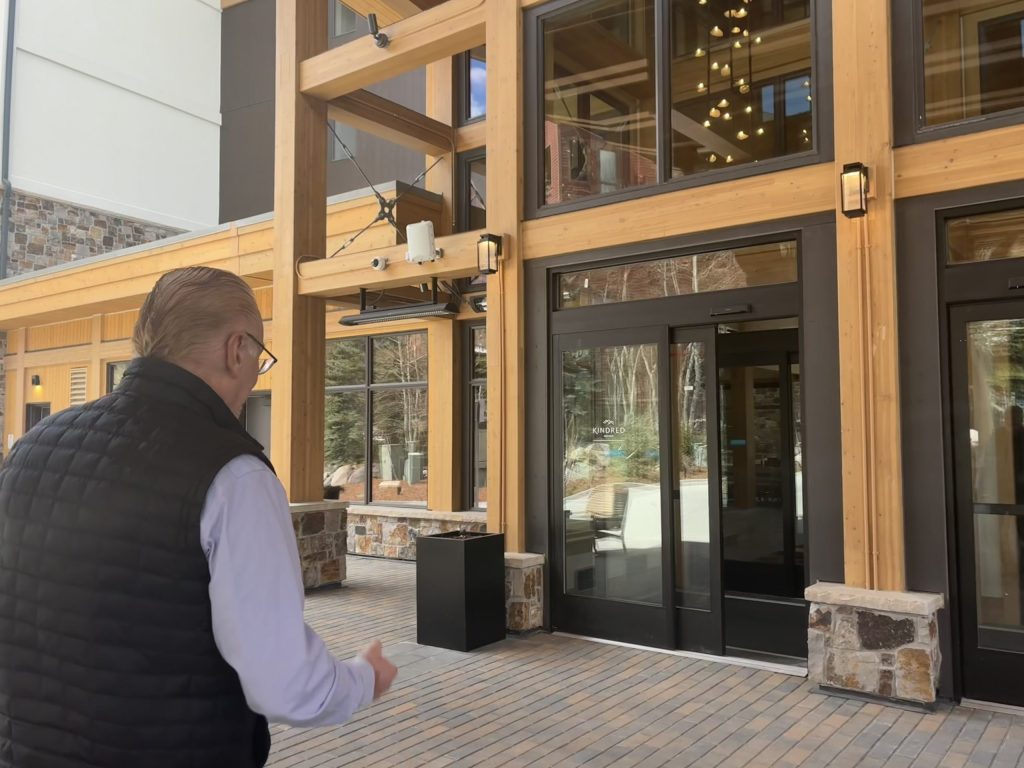
After years of planning, construction delays and mounting public anticipation, Kindred Resort is preparing to welcome its first guests at the base of the River Run Gondola in the coming weeks. General Manager Dan Dohner described the development as a “campfire luxury” experience designed to feel both elevated and inviting. 

“It’s the first luxury hotel in Summit County, as in full-service. Nobody has done it,” Dohner said. “In the first winter going into it, we’re seeing no resistance to having a luxury resort in Keystone. It’s a family resort town, but families also want this.” 

While the resort’s first two weekends are already booked with wedding groups that reserved their stays a year in advance, Dohner said the management team is intentionally limiting reservations prior to May 7 to ensure a smooth debut.

“We want to just make sure that all the buttons are tested and everything is in place,” he said. 

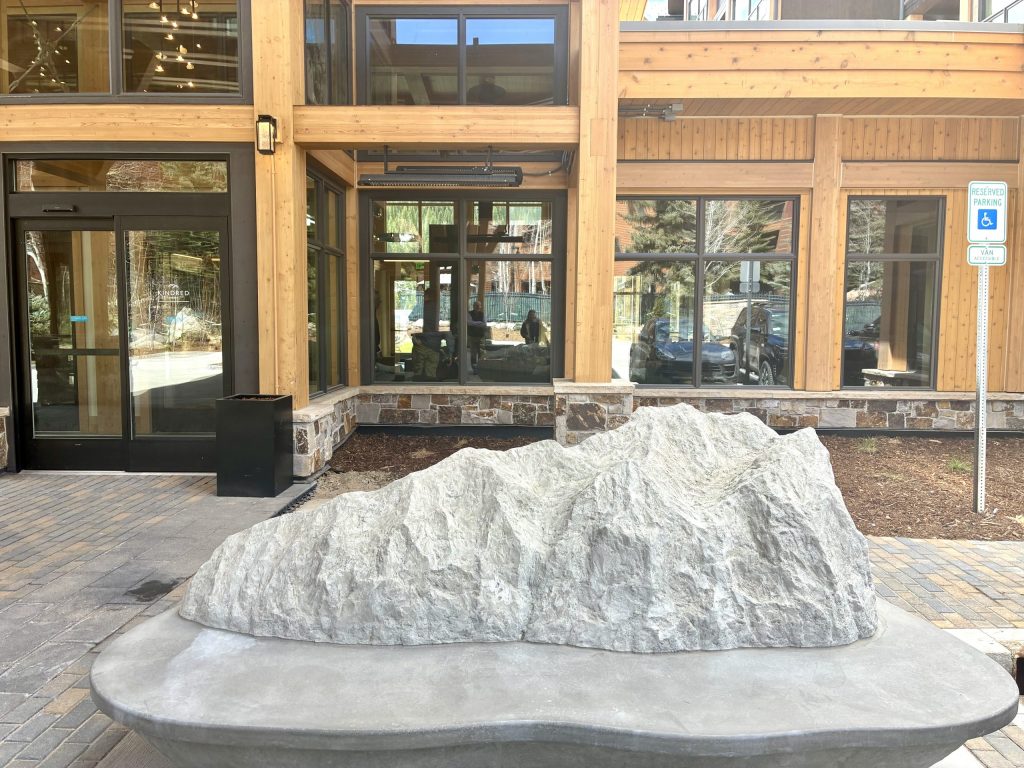
Dohner said Kindred was designed to draw people in rather than keep them out. Much of the resort will be open and accessible to the broader public, including an expansive patio, three restaurants and a bar in the lobby. The location at the foot of Dercum Mountain — home base for Keystone Resort — provides prime real estate for Kindred. Dohner said the resort will likely become a major hub for locals, out-of-town skiers and hotel guests alike. 

“It’s designed for skiers to come off the mountain — not just for guests — to come up and enjoy this area,” Dohner said while standing between firepits and yard games on the main patio. “It’s for everyone.” 

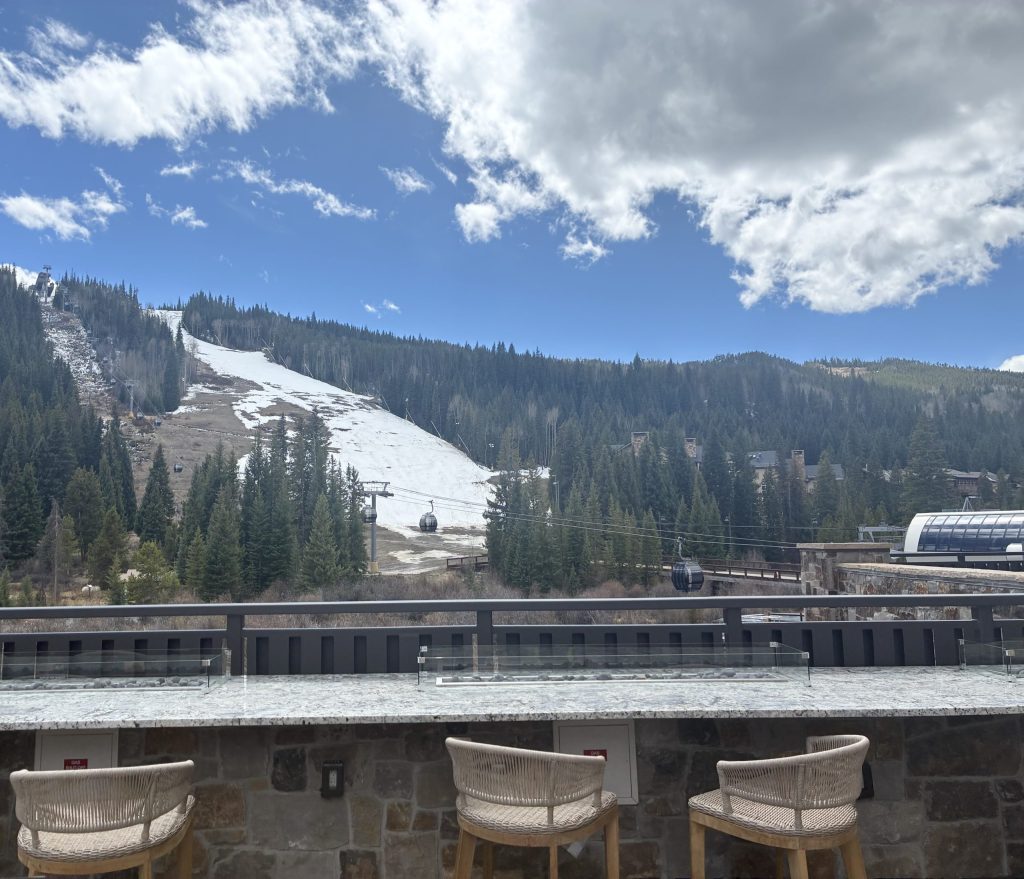
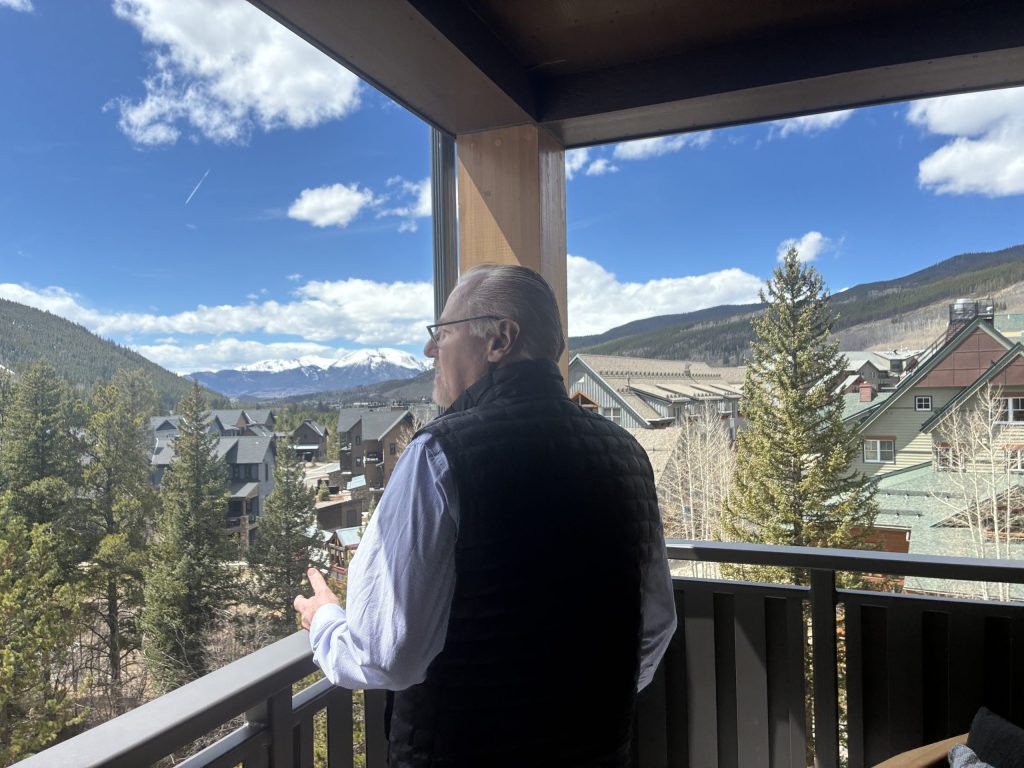
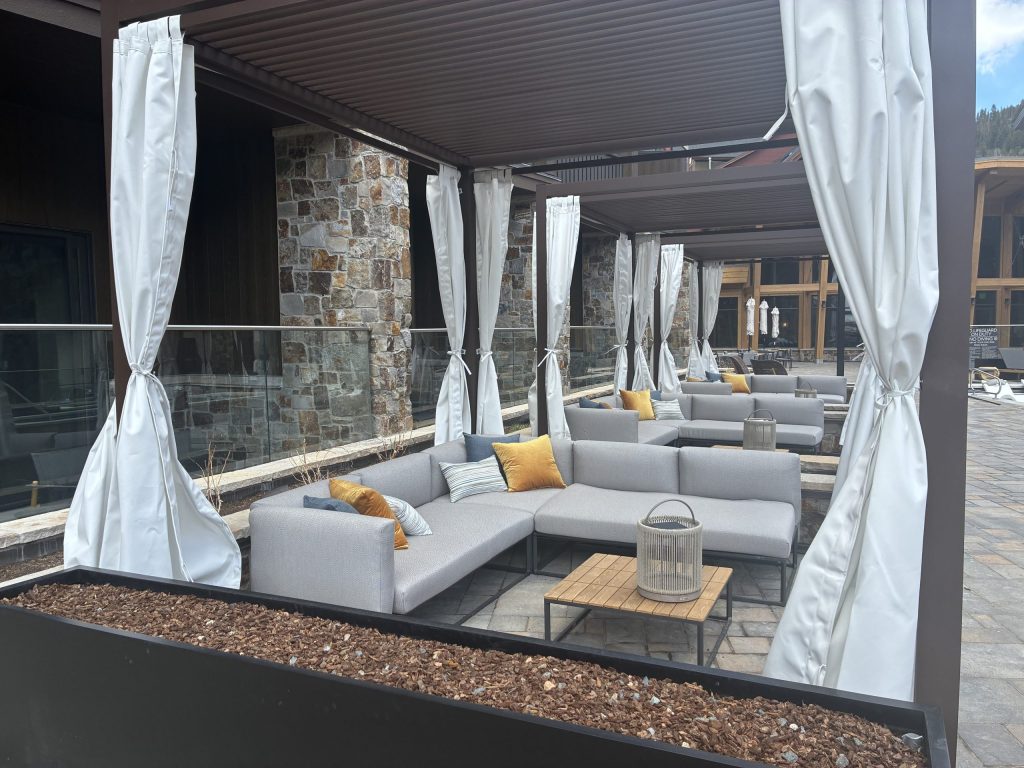
A sprawling patio just steps from the gondola sits at the center of the resort, accessible through the main lobby or via a “grand staircase” rising from the base area. Already, the space features nearly a dozen fire pits, lawn games like cornhole and jumbo chess and sweeping views of the surrounding mountains, wetlands and the Snake River. 

Just over the last week, the patio has already been put to public use. 

“Since we dropped the fences a week ago, there’s been a constant stream of people up here playing the games,” Dohner said.

Plans call for additional amenities, including a mobile bar, upscale s’mores fixings and occasional live music — further positioning the patio as an apres-ski and summer social space. 

The resort’s bar and three restaurants will also be open year-round to the public, an opportunity Dohner said is both unusual and important for the local economy, which has historically relied on ski season to generate sales tax revenue. 

Among the restaurants on site is Lula’s, built on the former homesite of Lula Myers, a well-known local teacher in the early 1900s remembered for her hospitality and culinary talent. The resort will also house Goodz Tavern, Kinji Sushi and a bar called Kindred Spirits.

“We are really set to be the center of Keystone, and we believe that we’ll help drive more activity,” Dohner said. “Absolutely nothing like this has happened in the area, like, ever.”

Dan Dohner, general manager at Kindred Resort, stands atop the “grand staircase” that leads skiers and guests straight from the River Run Gondola to the resort’s public patio. The resort officially opens to the public on May 7.
Allison Moore/Summit Daily News

Kindred staff aiming to deliver five-star service at four-star hotel

Inside, Kindred leans heavily into what Dohner calls a storytelling-driven design philosophy. 

“The developers put a lot of intention into the whole design,” he said. “When they walk in, we want them to have that ‘wow’ moment.” 

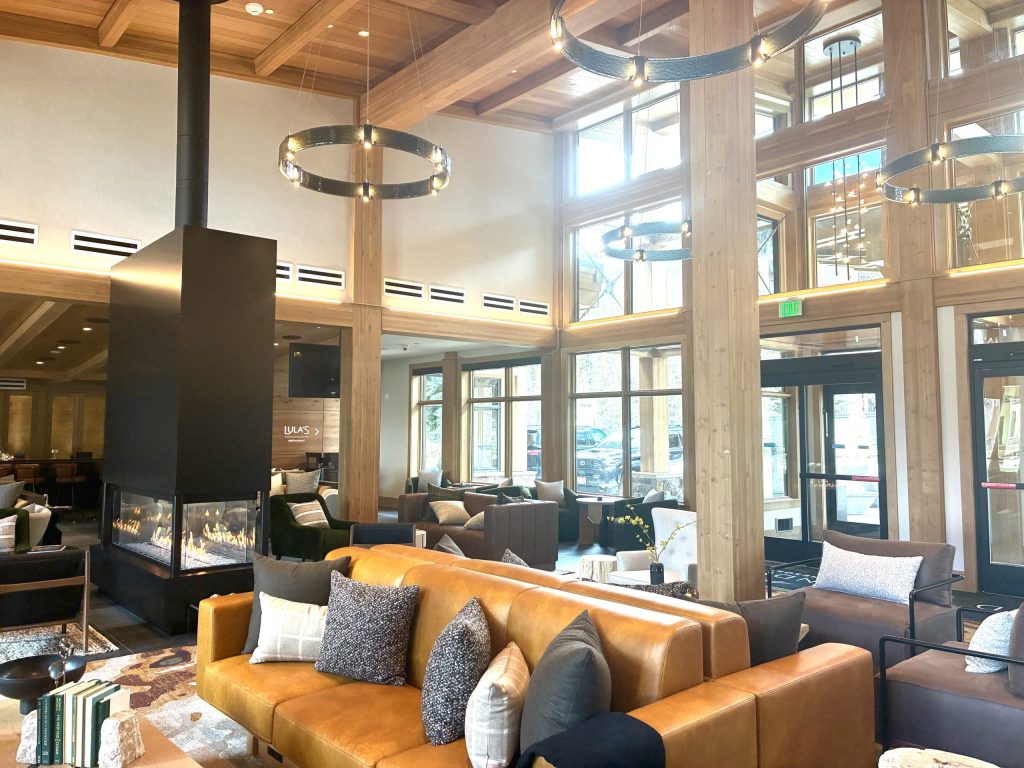
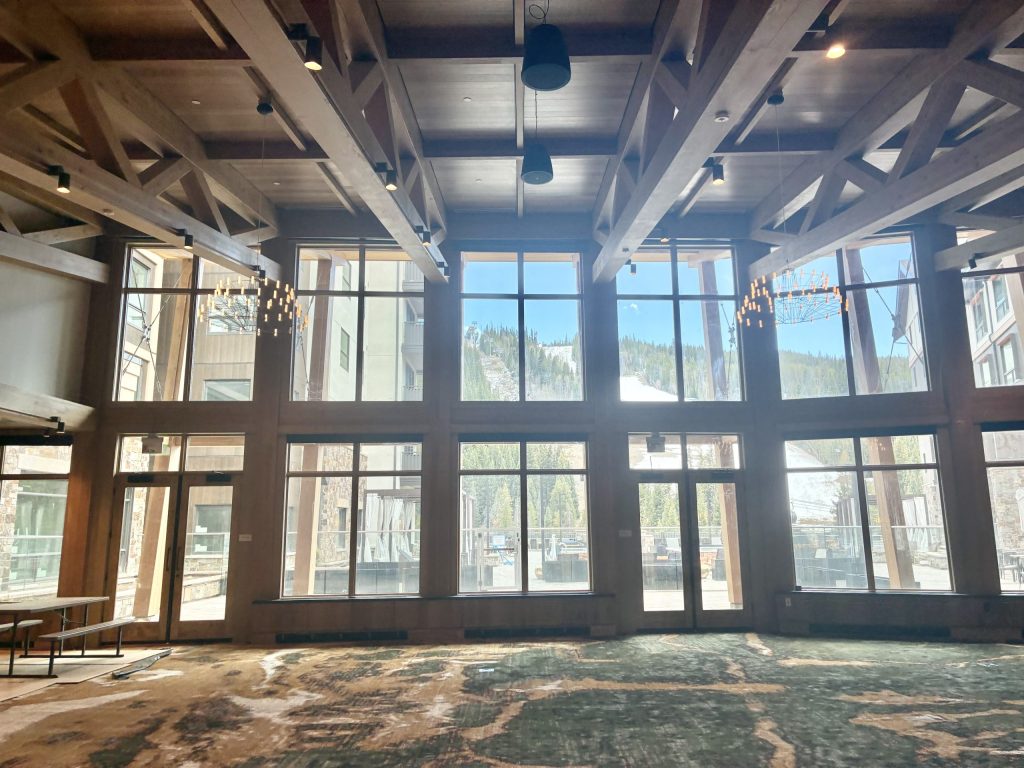
Guests entering the lobby are greeted by high wood-paneled ceilings, cozy seating areas and carpeting designed to resemble a topographical map of Keystone. A wall lined with windows opens to views of the patio, ski trails and surrounding wildlife. Metal and wood touches throughout the property are meant to resemble the feel of old mining towns — “well, a really fancy mine,” Dohner said.

Three 52-foot-tall towers comprising the resort — two for condos and one for the hotel — are intended to mimic the three mountain peaks featured in the Kindred logo. 

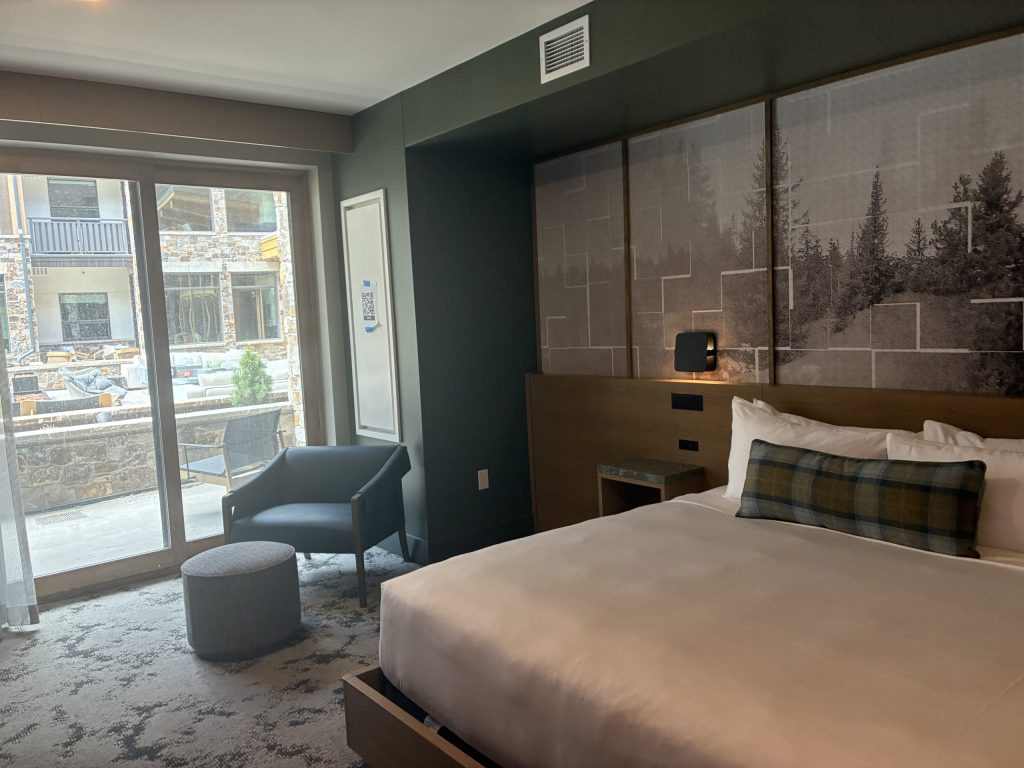
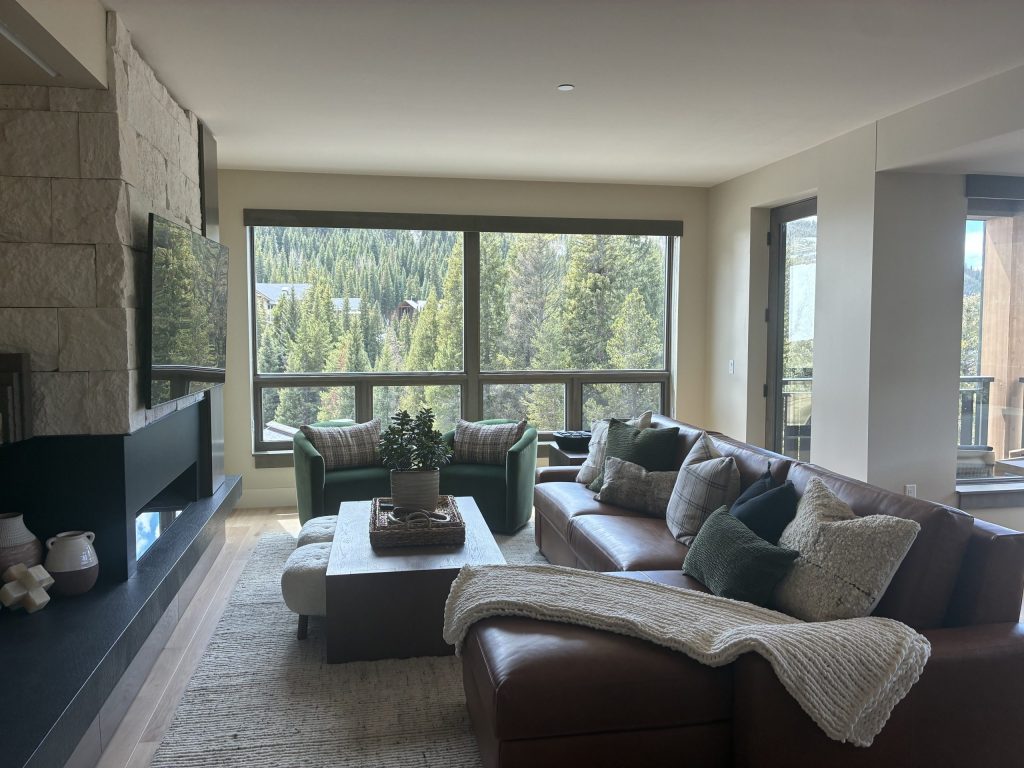
At full operation, the resort will book out 107 hotel rooms managed by RockResorts, 95 private residences, a membership-only Alpine club, a spa and salon, fitness center and over 10,000 square feet of meeting and event space. 

Dohner referred to the property as a “four-and-a-half-star hotel.” He said while Kindred is technically classified as a four-star resort based on its services, it intends to function like a five-star hotel. 

The resort already employs around 100 staff members and Dohner expects that to grow to around 140 when fully operational. 

“We’ve got a really good team here, and we’ve really had time to refine our staffing so that when guests are here we’re more than prepared,” Dohner said. 

Delayed opening tied to environmental factors, finishing design touches

Kindred’s official opening date comes months later than initially planned, following a series of delays that pushed its debut from summer 2025 to winter, and now to spring 2026. 

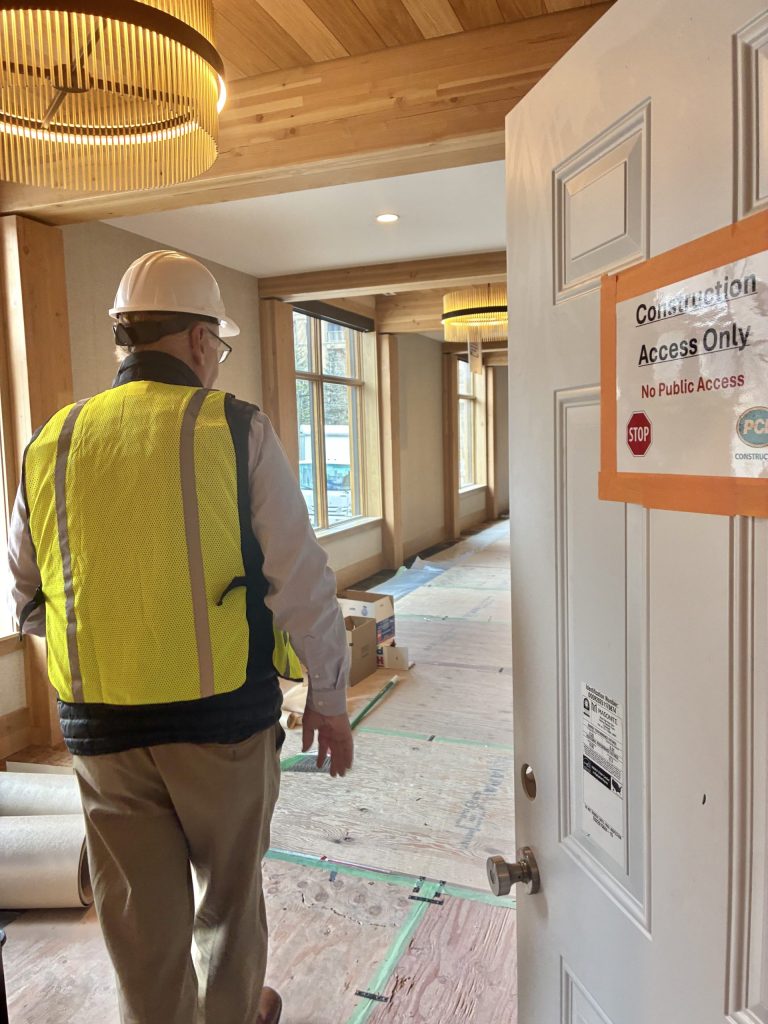
Dohner said those delays were driven largely by a desire to meet high standards rather than rush to open. Pointing to minor imperfections still being addressed during a recent tour of the property with Summit Daily News — like small chips in the paint down the first-floor hallways — Dohner said the team opted to take extra time. 

“In a normal hotel, that would probably be acceptable, but we wanted it just right,” he said. 

Construction challenges were also amplified by the resort’s high-Alpine location.

“When you’re building at 9,000 feet, things come up,” Dohner added.

The resort has gone through more than four developers since the land was acquired nearly 14 years ago. OZ Architecture, Kindred’s current developer, has remained with the project since 2024. 

Despite the delays, Dohner said the project continues to generate strong demand. All but seven of the resort’s 95 residences have already been sold and early interest in bookings has been steady. Once the restaurants open, Dohner said he expects reservations to flood in.

The roughly $300 million development transformed what was once a dirt parking lot into what Dohner imagines as Keystone’s next central gathering space. The resort is opening almost three years after residents voted to approve the incorporation of Keystone as a home-rule town. 

In the coming months, the resort will announce “sneak peek” opportunities for residents to view the amenities inside.

Housing lottery opening for first 19 units at Runway Neighborhood on Airport Road next month

The first 19 units in Breckenridge’s “last” large-scale workforce housing neighborhood development will soon be up for grabs via the county’s lottery system. 

Summit Combined Housing Authority will open the lottery for the first 19 homes in the burgeoning Runway Neighborhood development from May 11-15, marking a key milestone in a multi-year buildout that is expected to deliver 81 workforce housing units by the end of 2028. 

“This is the last big parcel that’s owned by the town of Breck and designated for workforce housing,” said Laurie Best, the town’s longtime housing director. “It’s an exciting time for the project and for the community.” 

An open house on Wednesday, April 29, from 4:30-6:30 p.m. at the Breckenridge Recreation Center will give prospective buyers a chance to learn about the homes, meet project partners and prepare for the application process ahead of the five-day lottery window.

Summit Combined Housing Authority runs the lottery and expects to release initial results by May 19, Best said. Those who receive high lottery numbers will then move on to a more comprehensive qualification process that requires applicants to submit employment and income information. 

Construction has been ongoing at the site off of Airport Road since August 2025. Best said crews have so far almost exclusively been working on underlying utility infrastructure like expanding water and sewer lines and paving roads. Actual homebuilding will ramp up this summer, with the first foundation slated to go up within the next month. Best said the first home could be “finished and ready for occupancy” by late December or early January if continued construction and the lottery process proceeds smoothly. 

The Runway Neighborhood sits near the town’s other recent workforce housing development, Blue 52, north of the River Park area and represents the final neighborhood to be built on usable town-owned land. Best said the town has owned the 24-acre parcel for nearly 25 years.

“Runways is kind of just the build-out of that property that was acquired a long time ago,” Best said. 

While the town is essentially “built out” in terms of developing larger neighborhoods to increase housing stock, Best said town leaders remain dedicated to finding future areas, albeit smaller, to build more diverse housing options for working Summit County residents. 

“It’s a high priority for council to figure out how we can provide opportunities for people to live in the community where they work,” she said. 

Best referred to the upcoming 19 units at Runway as “the first phase of the first phase” of housing construction. The entirety of the first phase, for which the town has pledged $34 million, entails 81 individual housing units. Best said those 81 homes will be built and sold in a series of four phases. Town officials have also discussed a future second phase of construction that would include an additional 67 units, but no decisions have been made yet. 

All units will be reserved for people who maintain employment in Summit County. Most units will also come with income caps to prevent higher earners from competing for some of the town’s most subsidized units.

“They’re not intended to be for remote workers or people that need a ski house,” Best said. 

The town partnered with Neighborhood Crafters, a Frisco-based developer led by Suzanne Allen Sabo, to develop the site. Sabo will be present at the open house on April 29.

In keeping with the town’s objective to provide diverse housing options for working residents, the first batch of 19 homes at Runway offers a range of options:

  • Six two-bedroom townhomes
  • Four three-bedroom townhomes
  • Two duplex units
  • One single-family cottage
  • Four three-bedroom single-family homes
  • Two four-bedroom single-family homes

Ratcheted down price points intended to cater to Summit County’s workforce

The town has framed the Runway Neighborhood as a major piece of Breckenridge’s long-term workforce housing strategy, with prices and eligibility requirements designed to prioritize the needs of low- to middle-income working families. Median home prices in Summit County sit over $2.2 million and continue to grow, outpacing salaries for many working families, according to the most recent market analysis from Land Title. Around 68% of the town’s housing stock is made up of second homes or vacation rentals, according to a countywide housing needs assessment completed in 2023. The study also found that around 60% of all renters, and 86% of Latino renters, spend over a third of their income on housing costs. 

Some townhomes in the Runway Neighborhood will start at $351,000 and larger homes with more bedrooms will reach around $800,000. Best predicts the number of residents entering the housing lottery will continue to increase as the development gains more traction. Over the next two years, Best said there will be another three lotteries open for the rest of the houses built in the first phase. 

“I know there most likely will be significantly more people interested in the units because of these price-points,” Best said. “We don’t want people panicking thinking this is their last chance to get into the lottery.” 

Best said units in the Runway Neighborhood will be some of the lowest-priced homes for sale in Breckenridge. 

“They’re our most affordable and deeply subsidized (properties),” Best said. “To get prices down to $351,000, that requires a lot of public investment.”

Best said the town has committed to spending $24 million on public utility infrastructure at the site. Town workers will later maintain the roads, water lines and other utilities in and around the neighborhood. Another $10 million will help close the gap between construction costs and attainable sales prices, while the developer covers all costs associated with building the homes. Best said around $5 million in state grants will further offset expenses. 

“The town’s super fortunate because we do have a designated housing fund,” Best said. “A lot of communities that are struggling with workforce housing don’t have a local funding stream, and up here in the High Country where the cost of construction is so expensive, it’d be impossible to do any workforce projects without local funds.” 

The town’s housing fund draws from a voter-approved sales tax adopted in 2006, which Best said generates around $7 million annually, coupled with short-term rental fees approved by voters in 2016 that bring in roughly $6.5 million each year. 

Town aims to incentivize build-out of 20 ADUs

Best said the Runway project also includes long-term strategies that the town hopes will further expand housing supply. 

The developer agreed to install 20 almost-ready accessory dwelling unit spaces above garages at single-family homes, hoping to incentivize owners to complete the interior of the units to rent out to locals.

While Breckenridge Town Council members previously requested fully building out 10 of the 20 accessory dwelling units, Best said that has since changed: all 20 units will have shells for accessory dwelling units with unfinished interiors. 

“It’s basically ready for conversion to an ADU if the owner wants that,” Best said. “Ultimately it would be our goal that all of the 20 ADUs are eventually built out.”

Best noted that the town has partnered with Summit School District on the project and plans to offer a priority process for its employees — an effort aimed at helping more local educators find stable housing. Best said more details will be revealed at the open house April 29. The project developer, representatives from Summit Combined Housing Authority and the school district will also be present. 

Before then, Best said, “The message for people right now is: if you think you are interested in buying, the very, very first thing you need to do is talk to a realtor and talk to a lender.”

Spring housing market off to a slow start for mountain-town listings as winter slump lingers

Still recovering from a lackluster winter for snowfall and tourism, home listings across ski town housing markets are off to a slow start during one of the year’s most critical selling seasons.

Spring is notorious for being one of the busiest seasons for home listings, largely driven by an increase in buyer demand. As snow begins to melt off homes and owners move their units from the winter rental market to the seller market, the season can often act as the perfect intersection between an increase in listings and a summoning of potential buyers looking to close the deal on a new home before a lengthy summer vacation or the start of school in the fall.

“Late spring is a popular time for bringing homes on the market in Routt County as buyers often want to see what the property looks like without snow on the ground,” Marci Valicenti, broker associate with The Group Real Estate in Steamboat Springs, said in an email. “Multi-family properties come on the market at all times of the year, but owners of ski-properties will often wait until after ski season to list after capitalizing on the winter rentals.”

On top of buyers having more listings to choose from and sunny views of the homes — which can matter a lot when the price tag is in the upper hundreds of thousands — Strategic sellers can also benefit financially during the spring market. Homes listed around late May and early June have been shown to sell for 2% more, according to an analysis published by national real estate company Zillow.

Following a slower winter market, rising economic uncertainty and spiking mortgage rates, however, real estate agents say this year’s spring market could face more uncertainty.

Colorado approaches a balancing market

In its monthly Market Trends Housing Report, the Colorado Association of Realtors reported the state is seeing steady sales, stable pricing and rising inventory — a common indicator that the spring season is in full swing.

Statewide, March brought roughly 12,800 new listings, up 0.8% from the same time last year, and 9,540 pending sales, up 7.2%. Sold listings were just over 7,460, an increase of 2.7% from March 2025. The median sales price also saw modest improvements, falling just under 1% to $545,000.

These characteristics can be encouraging for aspiring homebuyers, who during the spring can sometimes find more opportunities for negotiation and concessions.

Active inventory for March 2026, however, is sitting slightly lower than what the state saw last year for both single-family homes and condos — down 1.6% for a total of 25,367 overall. This pushed months supply of inventory down 2.8% from a year ago to 3.5 months.

Ski markets recover from a challenging winter

Rural ski resort markets on Colorado’s Western Slope, however, show a slightly different picture thanks to an especially challenging winter season for the real estate market.

One glaring culprit is the record-low snowfall that fell across Colorado’s Western Slope, leading to lower tourism for several mountain resort destinations. Dana Cottrell, incoming president of Altitude Realtors in Summit County, said lower tourism can contribute to weaker buyer activity, since fewer eyes on available homes means less inquiries from aspiring homeowners.

Mike Budd, a real estate broker associate with Berkshire Hathaway HomeServices Colorado Properties, said in the report that the heightened uncertainty from reduced tourism has only added “one of the most dramatic and challenging periods” Vail’s housing market has experienced in the past 50 years.

“The snowpack and visitations were down significantly which impacted the economy and presents a major impact for the valley due to drought and significant shortfalls of reserves in the reservoirs moving into spring and summer months. The impact on small businesses could create significant failures,” Budd said. “Spring and summer markets are a difficult situation to forecast at this point.”

Although Vail’s closed and pending sales all saw increases compared to last spring, new listings in March are down 4.2% from last year, with fewer people putting homes on the market during the first month of spring. Still, overall inventory of active listings remains 6.9% higher than March 2025.

In Steamboat Springs, new first-quarter listings for single and multi-family homes are down roughly 20% compared to the first quarter of 2025. April so far has seen 15 single-family homes come on the market in 15 days, lagging behind April 2025’s inventory of 52 homes, Valicenti said.

Active inventory for March looked slightly better, with 54 single-family homes at the end of March 2025 compared to 68 in 2026.

Buyer activity typically peaks during the summer months in Routt County, Valicenti explained. A lackluster season in 2025, however, caused summer activity to emerge late in the year — which could happen again in mountain towns.

“With 2026 already seeing unconventional weather patterns, it remains to be seen if real estate activity will follow its traditional seasonal cycle and peak this summer,” Valicenti said.

Some markets, like Aspen, have two “high seasons” for inventory, mainly spring and fall. Currently in a shoulder season, April and May mark months where “property owners get energized to move into the market and make their moves,” according to Brenda Wild, Aspen broker and owner of Berkshire Hathaway HomeServices.

This year, however, has presented an anomaly for the housing market. New residential listings in Aspen are down 28.4% from last year, a steeper dip compared to the 10.2% decrease from 2024 to 2025.

“Inventory tends to rise prior to the height of the summer and winter seasons to capture the resort/second home buyer,” Wild said in an email. “A steady decline for the past two years in spring listings is not normal for our market. It is reflecting some key factors in the national real estate market that are impacting and slowing down activity in listings.”

Homeowners with low interest rates, Wild said, might be more hesitant to let go of their current holding. Proposals to increase capital gains tax exemption thresholds have also pushed some property owners to hold off on selling for the time being.

Even with lower listings, Aspen buyers are staying active. Showings to pending sales are up 61.5% year-to-date compared to 2025, which was down 13.3% compared to 2024, Wild said.

Cottrell said she’s seen more residential listings pop up in Summit County heading into spring, though not as many as last year. New single-family home listings were down 11% for March compared to last year, or 3% for multi-family homes.

What has kept her optimistic about the market, she said, is the amount of interested buyers she’s heard from this early into spring.

“It’s like, ‘Wow, I had no idea that many people are out looking in April,'” Cottrell said. “I thought we were just going to trickle into the spring … but there are definitely people out there looking. Whether they’re actually buying, we’ll find out.”

She added that growing interest from buyers makes her hopeful that residential inventory could still see a boom during the warmer months, since inventory has consistently fallen under what was typical before the pandemic. 

“That’s very, very promising to me to see that, because that’s not always the case,” Cottrell said. “So I feel very optimistic for the spring. I feel like we’re going to start to see more inventory. … It’s just a matter of buyers being out there.”

What about home prices?

Median prices for single-family homes in Summit County have consistently gone down over the last three months, Cottrell said. Comparatively, condos and townhomes have held steady.

“That’s telling me that more people are buying lower-priced houses than the big, big expensive ones,” Cottrell said. “But it’s hard to say what’s going to happen because we are going to start to see more inventory.”

The average price for a single-family home in Summit County was down 3% year-over-year in March, falling to $2.59 million. Meanwhile, the average price for multi-family homes have gone up 9% to over $940,000.

In Vail, March’s average sales price for a home fell 3.7% from 2025, with modest gains in sales activity. Steamboat Springs has also seen declining single-family median prices, which fell 21.4% to $1.57 million over the same period.

Economic uncertainties dampen outlook

Economic uncertainties like rising mortgage could dampen the outlook for buyer activity.

The national average on a 30-year fixed-rate mortgage is 6.34% as of April 17, according to Bankrate. Despite reaching a four-week low, rates are considerably higher than they were in February, when they briefly fell below 6%.

Now, the Federal National Mortgage Association is predicting that mortgage rates will remain above 6% throughout 2026, contrary to its original forecast.

The Mortgage Bankers Association’s latest weekly survey said purchase applications were 7% below the same week a year earlier, according to Matthew Starr, the owner and managing broker of Astralis Real Estate in Rifle.

“Across much of the Western Slope, where financed first-home buyers are a meaningful part of the market, a move back into the mid-6% range matters,” Starr said in an email. “Buyers are likely to be more cautious, take longer to make decisions, focus more heavily on negotiation, and be less willing to stretch on their monthly payment.”

Higher rates usually don’t stop cash buyers or equity-rich buyers, Starr added, though they do make financed buyers more selective.

“In that environment, sellers can still benefit from the spring increase in inventory, but they have to price and position their properties more carefully. Most buyers are looking at the monthly payment first,” Starr said.

While the ongoing war in Iran is certainly fueling economic uncertainty and impacting prices for other goods like gasoline, it can’t be fully to blame for rising mortgage rates. Urban Institute’s February chartbook shows that the 30-year fixed rate had already reached 6.09% before the conflict began, made up of a 4.14% 10-year Treasury yield and a 1.95% mortgage spread.

“That indicates mortgage rates are being shaped by broader mortgage-market pricing, not just geopolitical headlines,” Starr said.

Starr continued: “The Iran conflict is better understood as a catalyst than a sole cause. It likely pushed energy prices and inflation expectations higher, but mortgage rates also reflect sticky inflation, a cautious Federal Reserve, and a bond market that is repricing risk.”

Cottrell said that, while mortgage rates are not often the most important factor behind deciding when to buy a home, it does impact how long they’re willing to wait on the sidelines.

“I do think there’s an element of people saying, ‘Oh, we don’t have 3% mortgages anymore.’ I feel like that was quite the psychological hoop to jump through, to be able to say, ‘All right, I’m in the sixes and that’s normal,” Cottrell said. “I have a bunch of people that I showed many houses to last summer, and they just couldn’t pull the trigger.”

Blue River sends reminder on ‘significant overhaul’ of short-term rental regulations

“Significant noncompliance issues” in the short-term rental community in Blue River prompted the town to remind folks of its policies passed in November 2025 that took effect in 2026.

A town newsletter explained the changes were a “significant overhaul” of regulations, and noncompliance could result in financial penalties or the suspension or revocation of short-term rental licenses.

All short-term rental properties in Blue River must have an active license, which cost $300 at the base level and increases by $300 per bedroom. For example, a four-bedroom rental would cost $1,500.

In 2027, the town will enforce a strict “one owner, one property” rule. Any individual cannot hold more than one license or interest in multiple licenses within town limits. Violations could result in revocation of all licenses for a period of 18 months.

All short-term rentals must include the town’s license number, proper occupancy limits and a statement of parking spaces available on the property, which cannot exceed five spaces, in their hosting platform’s listing, such as Airbnb or VRBO. The URL for all listings must be sent to the town.

The town also implemented occupancy limits that allow two guests per bedroom, plus two more additional guests. A two-bedroom unit would have a max occupancy of six guests, while a three-bedroom unit would allow eight guests.

All properties must also provide lodging tax reports and payments for the first quarter of 2026 and any delinquent payments from 2025. Hosting platforms don’t remit these taxes to the town.

Short-term rentals cannot have outdoor wood-burning fires of any kind on the property, and any outdoor fire activity must be limited to gas-powered appliances with an automatic shut-off timer.

The town is also requiring each property to post a specific notice on the entry door and counter of a primary kitchen that covers contact information, quiet hours, trash and recycling info, parking restrictions, fire restrictions, water conservation and any other information deemed necessary by the town.

Western Slope lawmakers push more mobile home park legislation targeting sale disclosures, water quality

Colorado lawmakers are continuing to double down on efforts to bolster protections for mobile home residents, with legislation this year that addresses disclosure requirements in park sales and water quality issues. 

Much of the legislation tweaks existing state laws that have been passed in recent years to preserve mobile home communities, which lawmakers say have become some of the last bastions of naturally occurring affordable housing. 

Since 2019, lawmakers have created a dispute resolution process for alleged violations of homeowners’ rights, provided homeowners with a “right of first refusal” to buy their park if their owner chooses to sell the land, and required the state’s health department to test drinking water at all Colorado mobile home parks.

Bills proposed this year, led in part by Western Slope lawmakers, would build on much of that legislation, including a measure, House Bill 1224, that requires more transparency from park landlords who sell their land.

“In rural resort communities, many of our working families live in mobile home parks, because they are the only affordable housing that is not subsidized,” bill sponsor Rep. Elizabeth Velasco, D-Glenwood Springs, said Thursday during a bill hearing in the House Finance Committee. “Mobile home parks are not a temporary housing option. They are a home, community and one of the last remaining forms of naturally occurring affordable housing.” 

Other sponsors of HB 1224 are Rep. Andrew Boesenecker, D-Fort Collins, and Sens. Dylan Roberts, D-Frisco, and Lisa Cutter, D-Littleton. 

Transparency in park sales 

Under the bill, landlords would be required to provide certain information, if requested by a tenant, when issuing a notice of their intent to sell. That includes an explanation of the park’s purchase price, the age of the park’s infrastructure, inspection reports, rent data with redacted personal information and the park’s operating expenses. 

Additionally, if a mobile home park is being sold as part of a packaged portfolio sale with other real estate, landlords must disclose any changes or discounts for the sale of the park. 

“At the end of the day, this bill is about dignity and fairness,” said Velasco, who herself grew up in a mobile home park in Eagle County. “If residents are willing to do the hard work to try to save their community, the law should not leave them one step behind before the process even begins.”

State Rep. Elizabeth Velasco, D-Glenwood Springs, speaks during a news conference on March 11, 2026 at the Colorado Capitol. Velasco is sponsoring several bills during the 2026 legislative session seeking to bolster protections for mobile home park residents.
Robert Tann/Summit Daily News

Mobile home residents in several Western Slope communities, including the Glenwood Springs and Aspen areas and Oak Creek, located south of Steamboat Springs, have recently rallied to purchase their parks, with some sales successful and others still going through the process. Those park sales have climbed into the millions, with two mobile home communities being sold to residents last year for a combined $42 million. 

More commonly, mobile home parks have been priced above their appraised value, said Christina Postolowski, director for the state’s Mobile Home Park Oversight program. 

“Mobile home park sales in Colorado have been surging and so have the sale prices,” Postolowski told lawmakers during Thursday’s bill hearing. 

Proponents of HB 1224 say the measure is aimed at ensuring park residents who want to buy the land have the information they need to do so, and that sales by owners are being made in a good-faith attempt. 

The Willow Bend mobile home park is pictured in Oak Creek. Residents of Willow Bend and Willow Hill mobile home parks began rallying in September to buy the parks after being notified that the current owner has plans to sell both properties.
Trevor Ballantyne/Steamboat Pilot & Today

Some of the disclosure provisions in the bill sparked concern from the mobile home industry. 

Tawny Peyton, executive director for Rocky Mountain Home Association, an industry trade group for mobile home park owners, said Thursday that she worried some of the requirements would compromise seller confidentiality, such as the provision on portfolio discounts. 

Bill sponsors amended the legislation to address some of those concerns, including shielding landowners from having to disclose sale information for non-related properties. Lawmakers also moved up the implementation date for the legislation from this year to Jan. 1, 2027.

HB 1224 already passed its first committee hearing in March and cleared the Finance Committee on Thursday. Both committees advanced the legislation on a party-line vote, with Democrats in favor and Republicans opposed. The bill now heads to the House floor for a full chamber vote before moving to the Senate. 

Enforcement for water quality issues 

Another measure, House Bill 1145, would further empower the Colorado Department of Public Health and Environment to force mobile home park owners to fix water-related issues. 

The bill gives the department the authority to require mobile home park owners to remediate water issues when the water quality is not suitable for drinking, cooking, bathing, washing, or using with home appliances. 

HB 1145 gives state officials several tools for forcing compliance, including the ability to issue cease-and-desist orders, impose penalties and require park owners to perform additional water testing and implement remediation plans. 

Under current law, park owners can face civil penalties of up to $10,000 per violation. HB 1145 allows for an additional $5,000 penalty for every 30 days that the violation continues. A park owner may seek judicial review, but is not entitled to an administrative hearing to contest a penalty. Owners are also prohibited from passing the costs of remediation on to park residents. 

The bill is sponsored by Velasco and Cutter as well as Rep. Jacque Phillips, D-Thornton, and Sen. Kyle Mullica, D-Thornton. 

Sonia Sarabia, an organizer for the economic justice advocacy group 9to5 Colorado, said she regularly talks to families in mobile home parks who have consistently raised concerns about their water.

“Some families describe water that smells metallic or like chemicals,” Sarabia said during the bill’s first House committee hearing on Feb. 24. “Some have seen changes of color. Others avoid drinking water from the tap and instead buy bottled water or water filters because they do not feel safe consuming the tap water.” 

Apple Tree Park resident Janelle Vega shows the light brown discoloration and sediment that settled in the bottom of a jug containing water that was taken from the tap of her mobile home in March 2022. The Apple Tree Park mobile home community outside New Castle has for years been plagued by water issues.
Chelsea Self/Post Independent archive

Nicole Rowan, director for the Colorado Department of Public Health and Environment’s Water Quality Control Division, said so far, the department has tested tap water at 355 mobile home parks and is halfway to its goal of testing every park by July 2028. 

Of those tests, the department has found contaminants such as E. coli and arsenic in water at 33 parks, and has also identified 49 parks where water quality poses a risk to welfare, meaning the water may not be suitable for drinking, bathing or other household uses. Mobile home owners are required to notify residents within five days of receiving those test results. 

Rowan said the provisions in HB 1145 are important because, while previous legislation gave the health department the authority to regulate and enforce water quality standards for issues like E. coli, it did not give explicit authority to force remediation of “welfare” issues. 

Peyton, the executive director of the mobile home trade group, voiced concern during February’s hearing that some of the provisions being pushed by lawmakers could overregulate the industry. She said the sheer number of mobile home park laws that have been enacted in the past few years has hurt the creation and investment of mobile park homes and has led to more parks going up for sale. 

“Unfortunately, we’ve seen a significant rise in for-sale properties in Colorado,” Peyton said. 

Republican lawmakers voiced similar concerns. Rep. Max Brooks, R-Castle Rock, said he worried about the bill adding to what he called an already overregulated business environment that could, in turn, lead to less affordable housing. 

While Brooks voted for the bill in the House Transportation, Housing & Local Government in February, he voted against it when it came to the House floor in March. Brooks said he wanted to see more safeguards for mobile home park owners who may face high fines. 

“A lot of these folks are operating on very fine, very thin margins to begin with anyway,” Brooks said during a preliminary vote on the bill on March 4. “I think that if we’re trying to ensure that we’re supplying affordable housing, why would we do something that could then in turn risk the very nature, the very existence of affordable housing.” 

HB 1145 ultimately passed the House in a party-line vote of 42-22, with Democrats in favor and Republicans opposed. It clearedthe Senate Thursday in a bipartisan vote of 25-8. Sens. Marc Catlin, R-Montrose, Larry Liston, R-Colorado Springs and Janice Rich, R-Grand Junction, voted with Democrats to pass the bill. 

The measure will now go to Gov. Jared Polis for his signature. 

Lawmakers are also advancing another bill, House Bill 1120, which would improve notifications and communication of delinquent property taxes for mobile home parks, and provide more ways for parks to pay delinquent taxes and avoid having their property seized or sold by a county government. 

That bill is based on recommendations from a mobile home task force established in 2024. The bill is one vote away from being sent to Polis’ desk. 

New condominium project in Keystone offers residents amenities at nearby spa


A new 54-unit condominium development that is expected to break ground this fall in Keystone will offer residents and guests access to amenities at the adjacent Keystone Lodge & Spa.

Brightwood at Keystone will be constructed in two phases and are expected feature one- to three-bedroom units just off the Snake River recpath and minutes away from Keystone Resort by shuttle.

“We’re cognizant of why people are in Summit County, and we always try to bring something to our projects that helps with that feeling, with that activity level,” Midwest Development & Investment Corporation CEO Alan Marks said. “Our theme with this project is ‘your doorstep to adventure,’ I think that all of us who live in Summit County experience that on a regular basis.”

The the Brightwood condominiums will feature a mountain-modern aesthetic and the units will range in size from about 800-1,750 square feet, according to a news release from the development team. The project is being developed by Midwest Development in partnership with Summit Homes Construction and Slifer Smith & Frampton has been selected as the listing agent. It is the same development team behind the Clearwater Lofts development in Keystone.

Construction of the first 27-unit building is scheduled to get underway this fall with the first residents expected to move in sometime in 2025. The timeline is largely dependent upon weather, Summit Homes Construction managing partner Blake Shutler said. About 90% of the construction work will be completed by local workers and tradespeople, Shutler said.

“We’re not an out-of-town developer where once you buy your unit you’re dealing with someone who lives outside of Summit County,” Marks said. “Buying a home is not just buying a home and getting into it, it’s the feeling that if little things come up there is someone there to address them.”

About a third of the units available in the first phase of construction have already been reserved, said Slifer Smith & Frampton listing broker Dave Greenberg, with some previous buyers at Clearwater Lofts accounting for a few early reservations.

“We’ve had owners of Clearwater Lofts who felt they had such a good experience that they’ve put reservations on Brightwood,” Greenberg said. “I think that just speaks to the reputation that Summit Home Constructions and Midwest Development has with their projects moving forward in a timely manner and delivering a quality product.”

Marks painted a picture of the new condo owner pulling into their assigned parking spot in the heated underground garage, unloading their skis into their sizable storage locker and taking the elevator up to their condo to relax by an electric fire.

The condominiums are priced from $650,000 to about $1.8 million, and will feature quartz or granite counters, stainless steel appliances, hardwood flooring, in-floor radiant heating, 9-foot high ceilings, electric fireplaces and exterior decks. The condos all feature excellent views, including vistas of the Snake River and nearby mountain ranges, Marks added.

All but two of the condo units include an additional room for a study or den, and the complex is within walking distance of Keystone Lake, which offers shopping, dining and ice skating in the winter months, according to the release. 

Condominium owners and guests can expect to have access to the pool, hot tubs, steam room, sauna and fitness center at Keystone Lodge & Spa next door. The Keystone Tennis Center, miles of hiking and biking trails and two championship golf courses will also be just minutes away from the complex.

While the development team expects some of the buyers to be full-time Summit County residents, Marks noted that there are no restrictions on short-term rentals in this part of the county, so he expects many buyers will purchase units as investment properties.

Those who plan to rent or lease out their unit and choose to list it through Keystone Resort Property Management will be able to benefit from resort and conference business, allowing visitors looking to stay at the resort to book the units Marks said.

The development team said the project will also create four parking spaces along the Snake River, which will be available to the public to use to access the river for fishing and other recreation.

In Steamboat visit, Sen. Bennet highlights impact of statewide housing issues: ‘We don’t want to become Seattle’

Amid a statewide and local housing shortage, Steamboat Springs city officials, in coordination with the U.S. Forest Service and with support from federal lawmakers, are continuing to push for an affordable housing development on an 8-acre plot of federal land adjacent to Hilltop Parkway.

Under legislation introduced by U.S. Sen. Michael Bennet of Colorado and U.S. Sen. Steve Daines of Montana, which was signed into law as part of the 2018 Farm Bill, the Forest Service holds authority to enter into long-term lease arrangements with local authorities at qualified sites in exchange for cash or non-cash contributions.

The federal agency acquired the Hilltop Lane property in 1996 and planned to construct a headquarters on the site to serve Medicine Bow-Routt National Forest and the Thunder Basin National Grassland in Wyoming. But the agency ultimately decided to locate the office in Laramie, according to Forest Service District Ranger Michael Woodbridge, and the designated administrative land has remained unused.

Sen. Bennet and U.S. Rep. Joe Neguse, who represents Colorado’s 2nd Congressional District which includes Summit County, visited the lot on Aug. 23. They were joined by Woodbridge, members of the Yampa Valley Housing Authority, City Council member Michael Buccino and Routt County Commissioner Tim Corrigan, underscoring their support for development of affordable housing at the site.

“We are facing a housing crisis in Colorado — and that is not too strong of a word,” Bennet said. “And it is particularly problematic in resort communities.”

Statewide, nearly one-third of Colorado households spend more than 30% of their income on housing — a dynamic that often forces people to move farther from where they work, according to estimates compiled by the office of Gov. Jared Polis.

Like many other businesses and organizations in Steamboat, Woodbridge explained how a lack of housing directly correlates to difficulties in hiring both seasonal and permanent employees to work at the local Forest Service station he directs.

“Now that we have this land here and we haven’t put it to good use as an office location, we have the opportunity to partner with our local government and address the number one issue in Steamboat — which is housing,” Woodbridge said. “That includes firefighters, engineers, trail cutters and everything in between. Affordability is the number one reason we have people say, ‘Sorry, I would love to live in Steamboat, but I just can’t afford it.'”

Since the legislation allowing Forest Service land to be leased for the purposes of developing housing passed in 2018, Bennet’s office has worked with Western Slope communities and the Forest Service to identify nine administrative parcels suitable for development of affordable housing. To date, only one, in Dillon, has received approval.

On July 21, the Forest Service authorized a 50 year-lease of an 11-acre administrative plot with plans to build up to 177 affordable, long-term rental units of mixed configuration in Dillon, along with a community center, parking, public transit connections and upgraded infrastructure and utilities.

In Steamboat, a lease for the federal land has yet to be authorized and signed and a timeline for that to happen remains unclear, along with what the development might look like in size and structure. The development would not be subject to local zoning regulations because the property is owned by the federal government.

Still, local officials touring the property Wednesday all expressed a desire to continue to work toward a common goal and see the project through.

“We think this is a really great opportunity,” said Yampa Valley Housing Authority Executive Director Jason Peasley, adding that any development on the federal land in the future would make affordable units available for both Forest Service employees and community members.

“There is probably a capacity for about 100 units on this site,” he added. “That is not to say that is the right number … but it’s a great opportunity to take advantage of the land that is being under-utilized and make a big impact.”

Sen. Bennet commended the efforts of the local housing authority in its push to fill the local housing gap. But, he added, “everybody has a responsibility to ensure that our communities in Colorado can thrive,” and that includes local taxpayers, local businesses and the local ski resort.

“I think it becomes a reasonable question, in my mind, for the taxpayer that asks how resorts and other employers are helping make contributions to this as we go forward,” Bennet said. “… We don’t want to become Seattle, we don’t want to become San Francisco, we don’t want to be a place where people are deciding they simply can’t afford to live and therefore are moving to some other part of the country, or are moving out of Routt County to go somewhere else more affordable.”

This story is from SteamboatPilot.com.

(free)Summit County officials consider moves to make approving affordable housing easier

As part of an ongoing effort to expedite the development of workforce housing in unincorporated Summit County, local officials are considering several overhauls to their current land-use code

During a Summit Board of County Commissioners meeting Tuesday, Aug. 29, officials zeroed in on key policy changes they said could make approving low- and middle-income housing projects faster and less costly. 

That includes doubling the current density caps for deed-restricted units in the unincorporated county’s six residential zones, which the county classifies as R-1 to 6. 

“For example, if you’re an owner of a one-acre lot on R-6, which is six units per acre … this would allow for an additional six units for a total of 12,” said county planner Susan Lee. “These could be as townhomes, duplexes, condo development.”

Commissioner Josh Blanchard asked what impacts increased density would have on infrastructure such as parking and water access. 

Lee said it’s something county staff will need to research further and acknowledge there are some areas where additional density may be a challenge based on the accessibility of that infrastructure. 

Another proposal would significantly reduce the public’s opportunity to speak before commissioners during hearings on housing projects. As policies stand currently, preliminary and final subdivision plats, as well as site plans for new multifamily developments, must go before multiple public hearings, which county staff said can slow down the timeline for project approval.

Staff suggested removing the requirement for public hearings for workforce housing developments specifically, though they said commissioners could still call for a hearing — especially if it relates to policy or legal issues. 

Notices of the project and community staff reports would remain part of the process, staff said, as well as “opportunities for the public to call, ask questions and engage with staff about the project,” said community development planner Simon Corson. 

These changes are driven in part by a caveat of Proposition 123 — the statewide affordable housing fund created by Colorado voters that the county government recently opted into. In order to receive a slice of the funding for workforce housing projects, the county must ensure a fast-tracked approval process of no more than 90 days for building permits. 

Commissioner Tamara Pogue said the county has a mandate to find ways to expedite the review process since a majority of Summit County voters approved Proposition 123 in the 2022 election.

Approximately 60% of county voters approved the measure, exceeding the statewide margin of 52.6% to 47.4%

“We do have the public support on Proposition 123 … we have to figure out a way to make the 90-day timelines and this is what we need to do to get there,” Pogue said. “For folks that are concerned about a lack of a public hearing, that is what I’m going to point to.” 

Commissioner Elisabeth Lawrence agreed, adding, “streamlining this would be great.” 

Staff also proposed adding new code language around what they called “non-traditional workforce housing,” which includes tiny homes and shared amenity housing. Doing so would permit these types of homes to be built and occupied in the county’s various residential districts, staff said. 

While commissioners were supportive of these changes to residential areas, they stopped short of supporting overhauls in agricultural A-1 zones and said they want to see how the changes play out over time. 

Pogue added that county staff will also need to continue to look at infrastructure impacts in areas where density may be increased. 

Corson called adding new descriptions around nontraditional workforce housing a “lighter-lift” that could be finalized by the beginning of next year. 

Community report finds Frisco finances remained strong in 2022 as town balanced housing needs and recreation

The Frisco town government remained in a strong financial position last year, spending less money than anticipated while revenues also increased, according to the town’s 2022 Community Report.

While the town spent $800,000 less than anticipated in 2022, its revenues were also about $3 million higher than initially expected, the annual report found. Frisco “continues to be fiscally prudent,” Finance Director Leslie Edwards wrote in the report.

“One of the primary roles of government is to use taxpayer dollars to provide high-quality programs and services the community expects and deserves, and to do so in a thoughtful, transparent model,” Edwards said.

In 2022, the Frisco Town Council made inroads on addressing community concerns around affordable housing while also improving public programming and recreational experiences in town said Mayor Hunter Mortensen.

All the while, Mortensen and the town council kept the “nuts and bolts” of government, including infrastructure like municipal water and roadways, running smoothly while working within a budget framework that was “realistic.”

“We take pride as a council and as a town to be conservative stewards of the tax dollars we are entrusted to,” Mortensen said. “I feel we have done a very admirable job of balancing all of the needs of the community.”

On housing, Mortensen pointed to the progress made on the Granite Park workforce housing project with the Colorado Department of Transportation and the purchase of the 602 Galena Street property, where a 54-unit workforce housing project is now being planned.

He also pointed to recreational improvements that figured into last year’s financial calculations, including significant upgrades to the Frisco Bay Marina, plans to construct a new building at the Frisco Adventure Park and other improvements to the Peninsula Recreation Area and Frisco Nordic Center.

“The community report is the best way for anyone to see who we are as a town. What we value and how we stick to that,” Mortensen said. “I’d love for anyone and everyone to have a look. If you want a snapshot of ‘What is Frisco?’ I think the community report is the best way to look at it.”

The report is “short and very digestible,” Mortensen said. It outlines Frisco’s finances in general and as they relate to five areas of the town’s vision: thriving economy, inclusive community, sustainable environment, vibrant culture, arts and recreation, and quality core services.

With an estimated population of 2,813, a median age of 49, a median household income of $86,390 and a median home price of $899,535, Frisco maintained a $41,028,362 municipal budget in 2022, according to the report.

The report lists the principal employers in town as the town government, St. Anthony’s Summit Hospital, Summit School District, Whole Foods Market, Walmart, Herbal Bliss, Outer Range Brewery, Safeway, Summit County Ambulance and the Summit Stage.

Over the past five years, sales tax revenues comprised just less than 70% of the revenues to the town government, with the top ten sales generating about half of those revenues according to the report.

“We all know Summit County has been a victim of its own success post-COVID,” Mortensen said. “So the vast majority of the town’s finances come from sales tax. We’ve seen how busy it has been and how many folks are coming up to play in the mountains, and we’ve been a beneficiary of that.”

With a sales tax of only 2%, Frisco has one of the lowest local sales tax rates of any community in the region, on par with Silverthorne but lower than Dillon and Breckenridge (2.5%), Avon (4%) and Vail (4.5%).

The total sales tax in town is 8.375%, including the 2% local tax, the 2% county sales tax, the 2.9% state sales tax, a 0.75% county mass transit tax and a 0.725% Summit Combined Housing Authority tax, according to the report.

After starting the year with a general fund balance of about $8.4 million, Frisco ended 2022 with a general fund balance of about $12.9 million, the report states. The town reportedly saw almost $20 million in revenues to the general fund last year and spent about $14.5 million from the fund.

“A lot of towns in the West and in Colorado would love to be in the position we are in,” Mortensen said, “and we can’t take that for granted.”

Summit School District Superintendent eyes progress on housing effort for teachers, staff

The Summit School District could become one of several districts in Colorado’s High Country to build its own housing for teachers and staff, so long as its plan remains on track. 

During an Aug. 17 Summit School District Board of Education meeting, Superintendent Tony Byrd listed a district housing project as a key goal for the new school year. 

Officials have previously discussed the framework for a housing plan during a March 23 meeting, in which board members framed housing as a direct barrier to hiring and retaining staff. Currently, officials are considering building housing on four different district-owned parcels though Byrd said that also requires more conversation around future growth. 

“Any time we think about land, or facilities or housing, we have to think about: ‘Well if we build housing there do we have enough space left to build a school one day or whatever else might come up,'” he said. 

Implementing the first stages of a multi-year housing plan is a top priority for the 2023-24 school year, Byrd said, especially as issues like land-use and funding will dictate how and when a project comes to fruition. 

The issue of housing continues to prompt urgency in the district as it finds itself competing to hire and retain staff in a region stricken with a high cost of living. A 2021 Keystone Policy Center study that was cited earlier this year in the district’s housing proposal states that just 6% of the county’s housing stock is affordable to teachers. 

Teacher salaries were increased for this school year as part of a $53.8 million budget. The budget boosted starting salaries from $50,000 to $52,200, though veteran teachers will see the largest increases, with some eligible to make up to just over $112,000. 

But housing can still prove elusive even for earners of six-figure salaries, a demographic that local officials have called “the missing middle.” 

District officials may look to past housing successes of their regional peers. For example, the Roaring Fork School District, which covers Glenwood Springs, Carbondale and Basalt, partnered with Habitat for Humanity to secure 14 for-sale units for district staff. It then used $20 million from a bond (a voter-approved fund borrowing mechanism for capital projects) to build 66 rental units for staff ranging in price from $900 to $1,400 per month. 

“I need to make sure we keep moving on our decisions related to land, building up our bond in a year and related to housing,” Byrd told board members. 

While building housing is one option, officials said they’re open to exploring a range of ideas. 

“You can find housing solutions, potentially that don’t involve our land,” said board member Chris Guarino, adding that collaborations with local municipalities to use town-owned land could be one possibility.