Relative of man arrested on sexual assault of a minor charges expresses concern about plea deal ahead of plea sentencing hearing

A man arrested in April 2025 on seven charges related to sexual assault of a child will appear in court April 27 for a plea sentencing hearing.

Silverthorne Police arrested Adam Dayer LeBaron, 49, on April 14, 2025, according to court records. The 5th Judicial District Attorney’s Office later that month brought seven felony charges against LeBaron — one count of sexual assault, three counts of sexual assault of a child by someone in a position of trust and three counts of sexual assault of a child by someone in a position of trust as part of a pattern of abuse.

Court records show LeBaron posted a $40,000 surety bond after his arrest and that the conditions of his release on bond included GPS monitoring. At a March 23 hearing, the prosecution and defense informed 5th Judicial District Judge Reed Owens that they had reached a plea agreement and asked for more time to complete paperwork, according to court records.

Joanna Ray, who wrote in an email that she is LeBaron’s sister-in-law, expressed concerns about LeBaron’s case ending with a plea agreement. She wrote that a plea agreement could lead to LeBaron receiving a lighter sentence. 

As of April 21, no plea agreement had been filed with the court, according to court clerks.

Law enforcement’s investigation into the charges against LeBaron started in January 2023. Members of a fundamentalist Mormon sect in Mexico reported LeBaron had sexually abused a child in their family, according to an arrest affidavit. They also told police LeBaron spends time in Mexico and Silverthorne and has two wives, who were both pregnant in Silverthorne in August 2022.

The reporting parties stated relatives of the pregnant women came from Mexico to Silverthorne to help them with their pregnancies, according to the affidavit. While the relatives were in Summit County, according to what the reporting parties told police, LeBaron sexually assaulted one of them who was a minor.

Police interviewed the victim of that assault, and a summary of the interview in the affidavit stated the victim told police LeBaron had assaulted them previously when they were in Mexico. 

The affidavit stated that several people, in separate interviews with law enforcement, said LeBaron had been sexually assaulting children in Mexico for as many as 10 years, but his actions came to light in January 2023, when one of the victims told family members about his actions and other victims followed suit. 

LeBaron fled Mexico with his wives and children after victims started talking about his actions, according to what several parties in the affidavit told law enforcement.

The affidavit indicates three victims told law enforcement LeBaron had assaulted them in Silverthorne and Mexico. It stated that the charges of sexual assault as part of a pattern of abuse come from LeBaron committing sexual assault “numerous times with more than one child.”

The April 27 plea sentencing hearing is scheduled for 2 p.m. in Judge Owens’ courtroom. 

‘We are prepared. Are you?’: Summit County commissioners host array of officials for wildfire season preview

The Summit Board of County Commissioners held a wildfire preparedness roundtable at a special work session March 31. Representatives from local fire districts, the Summit County Sheriff’s Office, state-level agencies and more attended the meeting.

The group discussed the “risk picture” for the upcoming wildfire season, mitigation efforts, defensible space, community preparedness and fire restrictions and bans. The agenda had other topics that the group did not have time to discuss, like evacuation response and communication during incidents. Commissioner Eric Mamula asked county staff to schedule another session so the group could discuss those topics.

On several occasions, officials made the point that Summit County’s emergency response organizations have spent years preparing for a situation like the upcoming wildfire season, which could be exacerbated by a historically low winter snowpack. Matt Benedict, a Red, White and Blue Fire Protection District division chief, said the county’s fire districts are well prepared for wildfires thanks to training, capital investment and resilience initiatives.

“We talk about it in meetings all the time, that this is what we do,” Benedict said. “We are prepared. Are you?”

Dan Gibbs, the executive director of the Colorado Department of Natural Resources, started the meeting by saying the statewide snowpack is around 23% of the average and that Summit County, like most of the state, is experiencing extreme drought conditions. He said the lack of water stresses forest ecosystems and impacts agriculture, municipal water systems, recreation and tourism.

The lack of snow had one benefit for fire mitigation this year, according to Creighton “Dusty” Calfee, a U.S. Forest Service Dillon Ranger District fuels specialist. He said pile burnings can only happen before the snow gets too deep, which is usually around January. Low snow totals meant the Forest Service and other agencies could burn piles throughout more of the winter, Calfee said, and even led to the Dillon Ranger District accessing regional funds to increase efforts and take advantage.

Benedict estimated that, between the Forest Service and the county’s fire districts, Summit County saw around 6,500 pile burns this winter.

“That’s more than I can remember doing in my career,” Benedict said.

Brian Bovaird, the county’s director of emergency management, said that, in terms of fire risk this summer, “it’s pretty obvious what we’re facing.” The public has started paying attention to wildfire danger earlier than normal, Bovaird said, and his office is trying to capitalize on that attention.

Summit County has a “robust” public safety system, Bovaird said, that works on public safety issues like wildfire year-round. Bovaird said the county’s emergency services organizations are therefore preparing for this fire season the same way they would for any other.

“We get paid to think about the most extreme risk and how to respond to that,” Bovaird said. 

Jay Nelson, the CEO and fire marshal of Red, White and Blue, said that new fire codes include state requirements for increased mitigation efforts in new and remodeled homes. While Summit County local governments and fire districts are working to implement the new requirements, Nelson said, the county has required some level of mitigation efforts since the 1980s, so it is “not something new to the county.”

Similarly, Benedict said that work like fuel mitigation and defensible space home assessments have been especially common in the county since pine beetles increased fear of wildfires, especially in 2007.

“We started then preparing for this year, straight up,” Benedict said. “And (for) every dry year in between then and now.”

Benedict said that fuels experts warned Summit County would have about 20 years after the peak of the beetle infestation before it would see “very aggressive fire behavior” because of the fuel build up caused by beetles killing trees. Since then, he said, the county’s fire districts have done hundreds of defensible space home assessments per year and worked with local, state and federal partners on cross-boundary fuel reduction projects.

In recent years, rising home insurance rates have led to more homeowners associations of condominium complexes getting home assessments, Benedict said. He called those assessments a “massive bang for the buck” because of how many units they contain and their location in the county’s urban centers.

Benedict and Hannah Ohlson, the Summit Fire & EMS Wildland Divisions fuel specialist, said the fire districts have worked over the years to increase their wildfire preparedness. Benedict said every firefighter in the county is trained to wildland firefighting standards and receives annual training. Ohlson said Summit Fire has five wildland specialists and is adding a hazardous fuel reduction crew this summer.

Bovaird turned the conversation toward communications, saying the county is implementing a new feature in its SCAlert system, which he said allows for detailed emergency communications, that will allow visitors to sign up for alerts just for the time they are in the county. 

He also emphasized the importance of the public being engaged and aware of fire danger, saying around 85% of wildfires are human caused. Bovaird said people should take “small actions,” like fully extinguishing their campfires, making sure chains on their trailers are not dragging and causing sparks, and creating a plan of action for “when we do have a wildfire.”

“It’s not if; it’s when,” Bovaird said. “Wildfires are a natural phenomenon … are you prepared to actually listen to the direction and, in an efficient manner, get out of your home and get to a safe place?”

Adrienne Saia Isaac, the Summit County government communications director, spoke about the coordination of preemergency communications. She emphasized that messaging will aim to be simple and easy to understand while not inspiring “panic.” While the wildfire season will have high risk, she said, the county still needs tourists to visit and support local businesses.

Summit County Sheriff Jaime Fitzsimons, who also acts as the county’s fire warden, gave an overview of how fire restrictions and bans are implemented. Fitzsimons makes recommendations to the county commissioners based on certain scientific criteria, he said, and the commissioners decide whether to implement or lift restrictions.

Fitzsimons and other officials at the meeting said the relevant criteria do not yet constitute implementing fire restrictions.

Isaac wrote in an email that, with the commissioners meeting twice a month this year, if the sheriff recommends a change in fire restrictions on a week with no scheduled meeting, the board will call a special or emergency meeting to discuss the fire conditions and take a vote.

Colorado Senate passes Western Slope lawmaker’s bill bolstering penalties for child sex crimes

A bill to increase penalties and expand criminal charges for sex crimes involving children cleared the Colorado Senate unanimously on Monday, April 20. 

The measure, Senate Bill 15, is sponsored by Sens. Dylan Roberts, D-Frisco, and Byron Pelton, R-Sterling, as well as House Majority Leader Monica Duran, D-Wheat Ridge, and House Minority Leader Jarvis Caldwell, R-Colorado Springs. 

Roberts, a former deputy district attorney for Eagle County, said cases of commercial sexual activity involving children are on the rise in Colorado. 

A 2024 report by the Common Sense Institute, a Colorado-based think tank focused on free market enterprise, found that Colorado ranked 10th in the nation for human trafficking reports, with 84 incidents, based on FBI data. The report noted that virtually every U.S. state saw a spike in human trafficking reports during and after 2021. 

Roberts, during a preliminary Senate vote on the bill last week, said crimes involving children are mostly committed against “young girls who are under the age of 18 by older men, mostly white and socially and economically advantaged, who purchase and solicit children for commercial sexual activity.” 

Roberts added that Colorado already has laws against that type of activity, but added, “This is not what this (bill) is about. This is about making sure that the punishment for those crimes fits what I think most Coloradans would expect, which is prison time.” 

He said state law provides a loophole for sex offenders to avoid prison or jail time by allowing a judge to grant probation to those convicted of a crime. 

Sen. Dylan Roberts, D-Frisco, speaks on the Senate floor of the Colorado Capitol on Feb. 3, 2026.
Robert Tann/Summit Daily News

SB 15 would require a person charged with soliciting commercial sex activity of a child to spend a minimum of 364 days in a county jail as a condition of receiving probation. The bill also mandates minimum sentencing requirements for other related crimes, including pandering, procurement and pimping of a child, and keeping a place for commercial sexual activity with a child. 

Additionally, the bill makes internet luring of a child for commercial sexual activity a Class 3 felony, which can result in four to 12 years of prison time. Another provision of the bill changes “child prostitution” in existing law to “commercial sexual activity with a child.” 

“This bill is so important because it is brought to us by victims and advocates,” Pelton said during last week’s preliminary vote. “They see the increase in child solicitations, and they want to go after demand. That’s what they’re going after with this bill.” 

Other attempts to increase child sex crime penalties have failed 

While the bill won unanimous approval from Senate lawmakers, measures seeking to outright remove the chance of probation for child sex crimes have failed at the Capitol in recent years. 

The most recent attempt, Senate Bill 111, which would have removed the chance of probation for certain Class 3 and 4 felonies for child sexual assault, was killed in March by four Democrats on the Senate Judiciary Committee. Roberts was the only Democrat on the committee to join Republicans in voting to advance the measure. 

Democrats who voted against the measure were largely concerned with mandatory sentencing requirements, which they said would remove the ability for judges to weigh the nuances of specific cases and could result in unintended consequences for victims.  They also raised fiscal issues with the bill, which was projected to have cost $3.5 million due to increased incarcerations at a time when the state is grappling with a $1 billion-plus budget shortfall

Sen. Nick Hinrichsen, D-Pueblo, was one of the four Democrats who voted against that measure, but supported the bill led by Roberts during its Senate Judiciary Committee hearing in February. 

“I, as a matter of philosophical value, struggle with mandatory (sentencing) minimums because I think that judicial discretion is a critical part of due process,” Hinrichsen said at the time. “Yet this is so significant a space that I can absolutely get beyond that, and that’s not a barrier for me on this bill.” 

SB 15 will now be considered in the House. 

Man previously sentenced for sexual exploitation of a child arrested again on new counts of same charge

A man who received jail time, probation and rehabilitation requirements in an October 2025 sentencing for a charge of sexual exploitation of a child was arrested April 16 on two new counts of the same charge.

A judge issued an arrest warrant for Khidhr Odom, 33, on April 14 that listed two Class 4 felony counts of sexual exploitation of a child. The affidavit in support of the warrant stated a tip from the Internet Crimes Against Children Taskforce that the Summit County Sheriff’s Office received April 13 showed that a device owned by Odom had uploaded two sexually explicit images of minors in early January.

Odom’s previous sentencing was for an April 2024 arrest that also came from a taskforce tip. A plea deal accepted by 5th Judicial District Judge Reed Owens in that case dismissed nine of 10 charges for sexual exploitation of a child, 90 days in jail and a four-year probation period. At that sentencing, Odom’s defense attorney said he was looking to get into a rehabilitation facility, and Odom said he felt ready to do “whatever it takes” to get “my life back.”

The factual basis in the plea agreement described the count to which Odom pleaded guilty, stating he accessed with the intent to view, viewed, possessed or controlled a video that qualifies as sexually exploitative material of a child under 12 years old.

The tip about Odom reportedly uploading sexually explicit material in January was assigned to the Summit County Sheriff’s Office because Odom is registered as sex offender and transient in the county, according to the affidavit. Public defender Carolin Lopez said at an April 17 bond hearing that Odom now lives in Denver. The affidavit also stated that Odom is supposed to register quarterly and failed to do so in January.

Deputies’ investigation into the tip revealed Odom’s device had uploaded two images identified as child sexual abuse material to the internet on Jan. 5. Conditions of Odom’s parole set in October 2025 stated he was only to access the internet to clock in and out for his job.

Odom appeared in court April 17 in custody and remotely from Aurora, where he was arrested, for a bond hearing. The prosecution requested that Summit County Judge Robert Gregory set Odom’s bond at $15,000 and include conditions for sex offenders. The deputy district attorney said Odom has a history of sexual abuse, presents a threat to the community and was on sex offender probation when he reportedly uploaded the images.

Lopez said Odom would not be able to post a $15,000 bond and instead asked for Gregory to set it at $5,000. 

Gregory said he thought an elevated bond seemed appropriate and set the bond at $15,000 cash or surety. He also included probation conditions requested by the prosecution, including GPS monitoring and restrictions on Odom’s access to the internet, recording devices and distance-vision enhancement devices, among other conditions.

According to a Summit County Sheriff’s Office social media post, Odom posted his bond and was released April 18 after being transferred from Aurora to Summit County.

Odom’s next court appearance is scheduled for April 28 at 1:30 p.m. in Gregory’s courtroom.

In a statement about Odom’s arrest, Summit County Sheriff Jaime Fitzsimons said that his office’s partnership with the Internet Crimes Against Children Taskforce is “critical,” as arrests like Odom’s would not happen without it.

“Protecing children is our highest priority,” Fitzsimons’ statement read.

‘No-tolerance’ for illegal fires, stricter enforcement expected, says Red, White & Blue during wildfire mitigation campaign

The Red, White & Blue Fire Protection District covering Breckenridge, Blue River and most of southern Summit County, has begun rolling out a wildfire mitigation campaign encouraging residents to help maximize the area’s fire resilience prior to an expectedly extra hot and dry summer

Fire Chief Drew Hoehn outlined the district’s strategy during a presentation to Breckenridge Town Council on Tuesday, April 14, pointing to both increased internal capacity and a shift to increased enforcement of restricted wildfire policies in conjunction with the Summit County Sheriff’s Office. Hoehn and Noelle Valentine, Red, White & Blue’s public outreach coordinator, said both agencies will be stricter in shutting down unsanctioned bonfires often involving local high schoolers. 

“It’s a no-tolerance approach this year, whereas in the past we’ve taken more of an educational approach,” Hoehn said. “It’s certainly a departure from how those parties have been regarded in past years.” 

As worsening drought conditions and an unusually rapid snowpack melt leave much of the state increasingly dry, experts have warned that Colorado is heading into a more active wildfire season. Nowhere in the West are conditions as severe, according to a recent report from the U.S. Drought Monitor. All of Summit County is currently listed as experiencing an “exceptional” drought, which is the most severe designation on the scale

“We just can’t take the risk this year,” Hoehn said.

The Red, White & Blue Fire Protection District has rolled out a social media campaign outlining three phases of community-driven wildfire mitigation. The “pre-green up clean up” phase has already begun.
Red, White & Blue Fire Protection District/Courtesy photo

In preparation for the season, Hoehn said the Red, White & Blue has already been coordinating with partner agencies, including Summit Fire & EMS, and ramping up internal training. 

“We conduct an annual refresher training every year for our wildfire response, and we’ve already had our preseason meetings with all our stakeholders,” Hoen said. 

The fire district also recently promoted three staff members into specialist roles, a move Hoehn said was intended to “create a little extra horsepower for our mitigation inspections, operational planning and administrative capacities. 

Valentine summarized the department’s coordinated public outreach campaign, which she said aims to encourage residents to take an active role in wildfire mitigation.

“We’re looking at our wildfire communications campaign as kind of a six-month marathon,” Valentine said. “We are really focusing on our messaging being appropriately timed.”

Valentine said that officials are working with agencies across the county to maintain consistency when providing information to the public. She noted the department has also identified a need for additional outreach for short-term rental units.

“We are really working hard to make countywide decisions so that there’s no mixed messaging,” Valentine said.

Red, White & Blue has already launched its “Pre-Green Up Clean Up” social media campaign, requesting residents begin mitigation work at their properties as snow continues to melt. 

“My hope is that when everyone’s yards are snow-free again,we can get back on track,” Valentine said. 

The effort is part of a broader strategy broken into three seasonal phases:

  • Pre-green up cleanup: Walk your home’s perimeter and remove trash and debris; rake or leaf blow the first 5 feet around your home; trim shrubs and tree branches within 5-10 feet of your home.
  • Mid-summer cut and clear: cut and maintain grasses within 30 feet of your home; remove stored items from underneath decks; remove excess vegetation within 5 feet of your home.
  • Reduce fall fuels: weed whack wildflowers and grasses within 100 feet of your home; clean gutters, roof and exterior vents; leaf blow often as the aspens drop their leaves. 

“By October we’re really trying to find bite-sized tasks that especially our workforce families can do around their properties in 30 minutes,” Valentine said.

Council member Marika Page asked whether the district could help communicate schedules for county crews collecting downed vegetation placed along roadways for pick-up. Hoehn said the department will place an added emphasis on coordinating and advertising countywide cleanup efforts including the longtime Chipping Program that Page referenced. 

In March, district staff visited elementary schools and sent students home with informational materials, including instructions for assembling emergency “go kits,” which contain necessities like food, water, copies of important documents, evacuation maps, medications and other essentials. Council member Jay Beckerman asked whether outreach would also target older students. Hoehn said they plan to speak with juniors and seniors at Summit High School in May with messaging tailored to address risky behaviors.

“That’s more from a ‘no-bonfires-at-your-parties-in-the-woods’ stance,” Valentine said. 

The district is also reinforcing existing fire regulations. Control, or slash, burning is prohibited from Memorial Day to Labor Day or during periods of elevated fire danger. Some recreational fires are allowed but require permitting. 

For more information on wildfire restrictions, visit the Red, White & Blue Fire Protection District’s website at RWBFire.org

Cyclists trespass on private road, man reports neighbors walking in his parking spot and more in Summit County sheriff’s log

Last week, the Summit County Sheriff’s Office issued citations for illegal camping, investigated an automatic crash notification and helped extract an injured skier from the backcountry.

The following incidents occurred between Monday, April 6, and Sunday, April 12.

Deputies investigated April 6 after receiving a report that people were camping at the Pine Cove Campground despite it being closed. They found a couple and their two dogs camping with an active campfire in a developed site. The couple accessed the area with their vehicle, which was only possible if they drove on maintenance roads that are closed to the public because the normal entrances are gated. They told deputies a friend had told them they could camp there, and deputies issued them a citation for camping when not allowed and for having an illegal campfire. Deputies ensured the fire was completely extinguished before escorting the couple off the campground.

A report April 6 stated an elderly couple had not been heard from in more than two days and was potentially missing. They were supposed to leave the county and return to their main, out-of-state residence, but nobody had heard that they made it there. Their daughter reported she had not heard from them since they left and it seemed their phones were off, meaning she could not check their location. Deputies went to the couple’s home in unincorporated Breckenridge and spoke to renters there, who said the couple had left two days earlier. Deputies learned the couple had been in contact with someone else while traveling, though, confirming they were en route to their residence. Deputies notified the daughter, and no further investigation was needed.

Deputies investigated an automatic crash notification April 6 that came from Swan Mountain Road. The notifications are sent by cell phones when their GPS detects a severe impact and sudden stop. At the scene, deputies did not find a car crash or anyone in distress, but they did find a cell phone in the road and determined it had sent the notification. Deputies believe it was left on top of a vehicle and fell off when the driver drove away, and they later returned it to its owner.

A deputy on Interstate 70 saw a truck pulling a trailer April 7 that had chains dragging and causing sparks. Because those sparks are considered a wildfire danger, the deputy initiated a traffic stop and told the driver about the hazard. The deputy helped the driver secure the chains so they didn’t drag on the roadway and issued them a warning.

When people visited the B&B Trailhead near Breckenridge the morning of April 8, they found the remnants of a bonfire from the night before and alerted deputies. The area is open space, and camping and fires are not permitted there. Deputies investigated and cleaned up the site, then the next day they identified one suspect and issued them a summons for the illegal fire.

A man in unincorporated Breckenridge reported April 7 that his neighbors were regularly trespassing on his property. He said he had asked the neighbors not to walk on his parking spot but saw them do so on his security camera. Deputies responded and discovered it was an apartment building with a shared parking lot, and while the spots are assigned, they are not enclosed by a fence or any official barriers. They told the man his neighbors are allowed to walk around the parking lot and advised him to speak to his landlord about the issue if he thought it was necessary.

While on patrol April 9 in Wildernest, a deputy saw a parked vehicle with one of its doors open. A man was leaning out of the vehicle, vomiting, and the deputy stopped to check on them. The deputy determined the sick man had two active warrants for failure to appear in court. They arrested the man and took him to St. Anthony Summit Hospital for medical clearance before transporting him to the county jail.

A Wildernest man purchased a gun online and had it shipped to a local dealer, but was not able to get a hold of the dealer a day after the gun arrived. He reported the gun as stolen April 9, and deputies were also unable to reach the dealer. They advised the man to give the dealer a few days to respond, suggesting the lack of communication may not be a sign of wrongdoing. Deputies found no crime had occurred as of the time the man reported the issue.

After a woman posted on Facebook telling people to not trust a man’s business and sharing a photo of the man, he reported the incident to deputies April 10 as harassment. A deputy reviewed the post and told the man it did not contain any threatening or illegal content, and the Sheriff’s Office took no further action.

Security personnel at the Climax Mine reported April 11 that two cyclists had trespassed on the mine’s property by riding on a clearly marked private roadway. Surveillance footage showed the cyclists passing two “No Trespassing” signs, as well as others indicating the road was private property. Security intercepted the riders and escorted them back to the entrance. There, the riders told deputies the bike path abruptly ended at the private road, and after looking at a map, they decided it would be safer to ride on the private road than on Colorado Highway 9. Deputies issued them summonses for trespassing.

A shop owner requested help April 11 when a recently fired employee showed up to the store with signs urging customers to boycott the store. Deputies responded but found nothing criminal, as the man was exercising his rights legally on public property.

When a father could not reach his daughter by phone April 12 and could see from her location that her phone had been stationary on Tiger Road for over five hours, he called deputies for a welfare check. Deputies responded to the area and found a truck further up the road with the daughter inside. They found nothing suspicious or criminal, as the daughter and her boyfriend had gotten stuck in the snow and were waiting for some family members from the Front Range to come pull them out with a winch. Deputies informed the father that his daughter was OK.

Deputies responded with the Summit County Rescue Group to an injured backcountry skier near Coon Hill on April 12. The responders safely extracted the injured skier and transported them to an ambulance, which took them to St. Anthony Summit Hospital for further treatment.

Breckenridge Police Department asks public for help identifying burglary suspects

The Breckenridge Police Department is investigating a reported burglary at a hotel in Breckenridge and has asked the public for help identifying suspects.

Officers responded to The Village at Breckenridge March 11 when security personnel reported a male and female had forced their way into the building around 1 a.m. Police reviewed video footage and identified two suspects, who they are now asking the public to help identify.

A department news release described the male suspect as white, in his late 20s to early 30s, having long “brownish” hair, wearing a “grayish/blue” winter coat, blue pants and gray shoes and carrying a backpack. The female suspect is described as white, in her late 20s to early 30s, having long black hair, and wearing black leggings, a white shirt, a maroon and black winter coat, a black and gray fleece hat and tan boots.

Anyone with information can contact the nonemergency dispatch at 970-668-8600, ask to speak to a Breckenridge Police Department officer and reference case number 2026-03058.

Man arrested on charges of soliciting for prostitution of a minor sentenced to supervised probation

A 5th Judicial District Court Judge on April 13 sentenced a man Summit County Sheriff’s Office deputies arrested in August 2024 as part of an undercover operation related to child prostitution.

The undercover operation, conducted by the Summit County Sheriff’s Office, Colorado Bureau of Investigation and other agencies, led to the arrest of three men. Law enforcement officers stated Isaiah Rapheal Brown, 34, and the other men arrested arrived “separately and independently” at agreed-upon locations in Summit County with the intent to pay for sexual acts with children.

Brown pleaded guilty to a Class 5 felony for cybercrime solicitation or arranging the prostitution of a minor. Judge Reed Owens followed the recommendation of the plea agreement the prosecution and defense reached prior to the hearing, sentencing Brown to four years of supervised probation with conditions specific to sex offenders.

Brown’s plea dismissed felony charges for soliciting for child prostitution, attempted patronizing a prostituted child, attempted sexual assault on a child and two counts related to human trafficking of a minor for sexual servitude. It also dismissed a misdemeanor charge for attempted contributing to the delinquency of a minor.

In September 2025, Brown entered pleas of not guilty on all counts, but he withdrew those pleas when he accepted a plea deal in January. The court had a jury trial scheduled in March for Brown until the parties informed the court they had reached a plea deal, according to court records.

At the sentencing hearing April 13, public defender Christopher Claypool, who represented Brown, said that Brown had complied with all court orders since his 2024 arrest and proven he is a good candidate for probation. Claypool said Brown has struggled with employment since his arrest but currently has a job, a place to live and a long-term relationship.

Claypool asked Owens to modify two conditions of the probation, relating to Brown’s allowed use of social media and gaming devices, because Brown makes supplemental income from social media businesses and competitive gaming. Claypool said that Brown had mental health issues at the time of his arrest but has been addressing them since through medication and therapy.

Deputy district attorney Jeanine Svoboda said the prosecution had no objection to the condition modifications, but Owens imposed them during sentencing. Owens suggested Brown should work with the probation office to try to carve out exceptions for his employment considerations.

Owens found Brown does not meet the criteria to be considered a sexually violent predator, but he said Brown will have to comply with sex offender-specific probation conditions. Brown’s sentencing requires him to pay costs and fees totalling about $3,000, according to court records.

Before dismissing Brown, Owens wished him luck, saying he should follow probation conditions just as he had successfully followed all bond conditions and court orders between his arrest and sentencing.

The other men arrested in the same undercover operation as Brown had previously been sentenced in February and in December 2025. Both of those men received jail time as part of their sentences, with one receiving 21 days and the other 60. Both received five years of sex-offender specific supervised probation as part of their sentences as well.

I-70 reopens following 70-vehicle pile-up Tuesday evening

7:50 p.m.: Interstate 70 eastbound reopened after an hours-long closure due to a multiple vehicle incident earlier Tuesday evening.

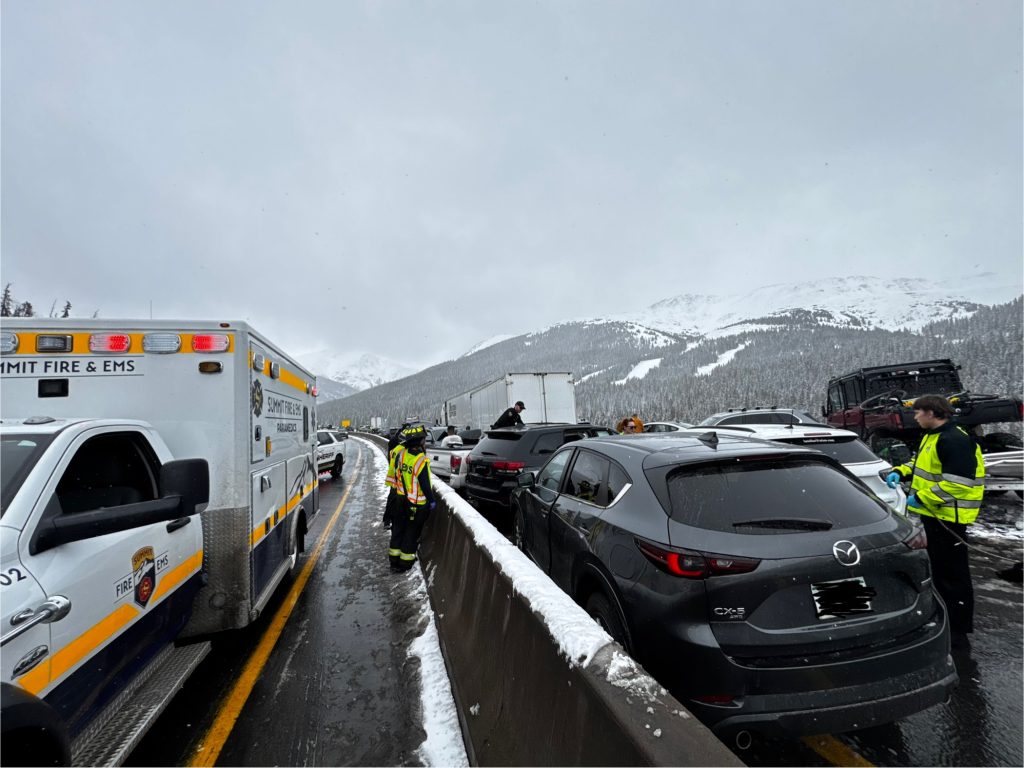
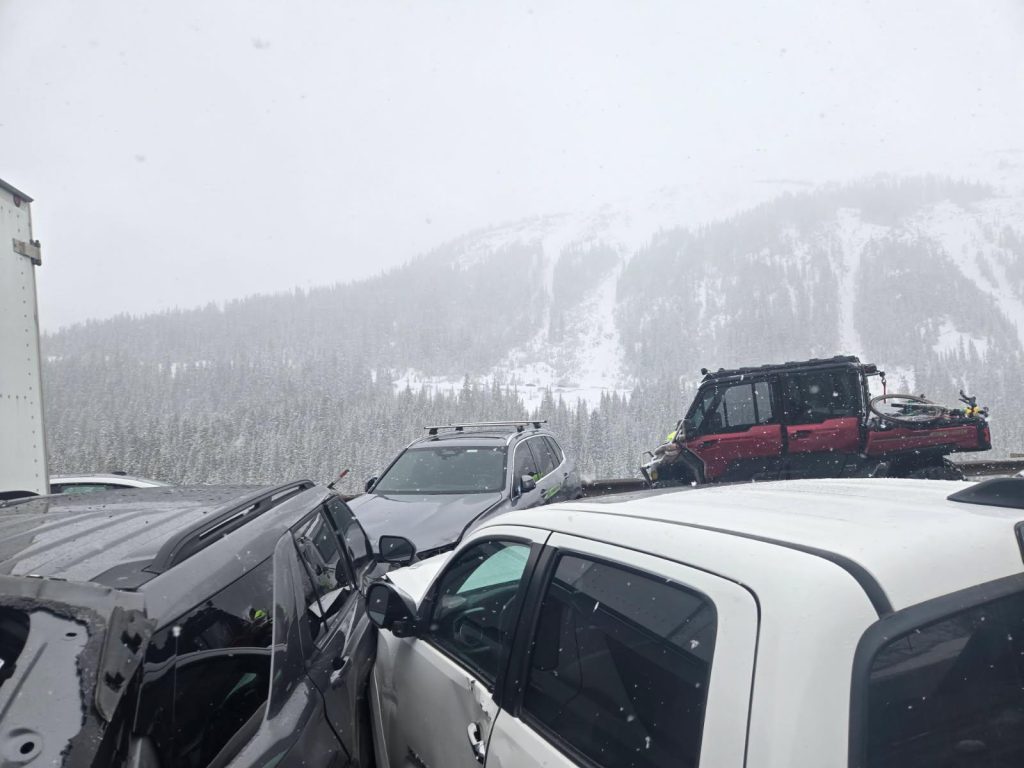
Colorado State Patrol stated in a news release that the most current estimates show around 70 vehicles were involved in the incident, and 19 people were assessed for injuries. Eleven of them declined transportation, and eight were transported to area hospitals. One person had serious bodily injuries.

Westbound I-70 was briefly closed at the tunnels for an unrelated incident, according to the release, that involved a pickup truck and trailer that jack-knifed.

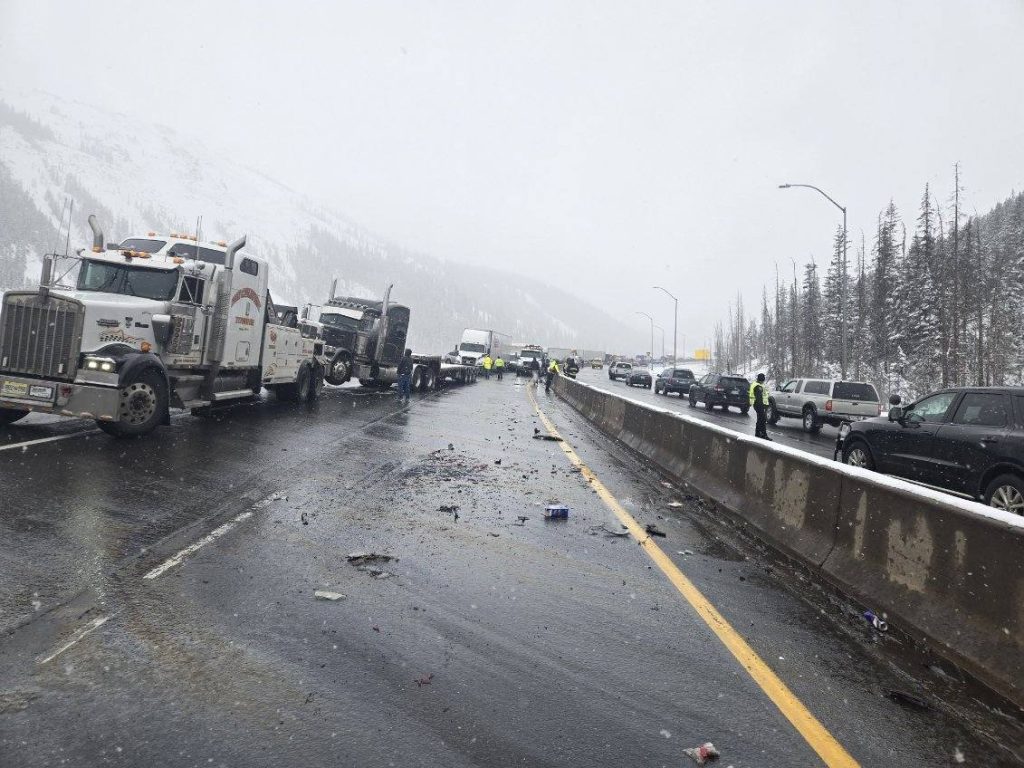
6:30 p.m.: Photos released by Colorado State Patrol show dozens of vehicles in a pile-up crash on Interstate 70 between the exit for Loveland Pass and the Eisenhower-Johnson Memorial Tunnels.

Eastbound I-70 drivers are being rerouted over Loveland Pass via U.S. Highway 6. Officials have not released an updated beyond the estimate for reopening happening between 8-10 p.m.

4:45 p.m.: Eastbound Interstate 70 is estimated to be closed for the next four to six hours, but one westbound lane has reopened while the left-most lane remains closed for medical staging following a multi-vehicle crash that occurred at 2:50 p.m. Tuesday, April 14, according to a Colorado State Patrol news release published at 4:48 p.m.

At least 19 people with various levels of injuries are being transported to a hospital, but no fatalities were reported. The Clear Creek Sheriff’s Office stated an estimated 75 vehicles were involved in the wreckage.

4:06 p.m.: On top of the full Interstate 70 closure near the Eisenhower-Johnson Memorial Tunnels, I-70 westbound is closed over Vail Pass for a crash.

4 p.m.: The Clear Creek Sheriff’s Office stated that the crash occurred on the on-ramp of eastbound Interstate 70, where traffic from U.S. Highway 6 merges into I-70. Deputies estimated more than 75 vehicles were involved, according to a social media post.

I-70 is still closed in both directions near mile marker 216 near the Eisenhower-Johnson Memorial Tunnels and is expected to be closed for “an extended period of time,” according to Colorado State Patrol.

Alternate routes are advised, and this story will be updated as more information is released.

3:50 p.m.: Both directions of travel on Interstate 70 near the Eisenhower-Johnson Memorial Tunnels are expected to be closed for “an extended period of time,” following a “large, multi-vehicle” crash, according to a Colorado State Patrol press release.

Alternative routes are advised.

The Clear Creek Sheriff’s Office estimated that more than 75 vehicles were involved in the crash that caused both directions of Interstate 70 to close for “an extended period of time,” according to the office’s social media post.
Clear Creek Sheriff’s Office/Courtesy photo

3:20 p.m.: A multi-vehicle crash has closed eastbound Interstate 70 through Colorado’s mountains following a multi-vehicle crash, according to COtrip.org.

The crash comes following numerous closures on Interstate 70 and other highways during a snowstorm that has brought a few inches of accumulation to valleys and icy conditions on mountain passes. There are more chances for snow later this week.

Traction and chain laws are in effect. For more information, visit CODOT.gov/travel/winter-driving/tractionlaw.

For the latest weather alerts, visit Weather.gov/bou. For traffic alerts and road conditions, visit COtrip.org.

Traffic backs up at the Eisenhower-Johnson Memorial Tunnels on April 14, 2026 following a multi-vehicle crash.
Colorado Department of Transportation/Courtesy photo

Silverthorne takes action at site of fatal pedestrian crash, 6th Street and Blue River Parkway, amid safety concerns and planning

A fatal pedestrian crash and ongoing safety complaints have prompted Silverthorne officials to plan improvements at the intersection of Sixth Street and Blue River Parkway.

“That corridor from Third (Street) all the way up to 10th Street has some safety concerns where vehicles meet pedestrians,” said Greg Camp, Silverthorne’s new town manager, at a Town Council meeting Thursday, April 8. 

Craig Phillips, a Silverthorne resident, read aloud a letter to council requesting the town restrict right turns on red or implement other safety measures to protect pedestrians and drivers at the intersection of Sixth Street and Blue River Parkway. 

“In my own experience driving through this area, making a right turn from Sixth Street onto Blue River Parkway often requires easing forward into the turn to see oncoming traffic,” Phillips said. 

Phillips added that oncoming traffic travels at a speed limit of 35 mph but said “there is a limited view of oncoming traffic from natural features and a slight bend in the road.” Located adjacent to the Blue River, the northern part of the intersection where Sixth Street meets Blue River Parkway is flanked by willows, pine trees and wooden fencing. Phillips said those natural features sometimes block visibility for drivers ready to turn right onto the four-lane parkway. 

“With these conditions present, it’s easy to focus primarily on vehicles and not immediately notice a pedestrian who may be crossing at the corner directly to the right,” Phillips said. “The visibility and reaction time feel limited, especially during busier times of the day.” 

On Jan. 10, a vehicle struck and killed 76-year-old Karen Rae Fox of Silverthorne, who was walking across Blue River Parkway via the crosswalk on the north side of the road’s intersection with Sixth Street. Max Gordon Miller, 46, was making a right turn from Sixth Street onto Blue River Parkway going northbound, according to a Silverthorne communications director. The Silverthorne Police Department subsequently charged Miller with careless driving resulting in death. 

Both Phillips and town officials referenced the fatal crash as evidence that the intersection needs added safety features to alert cars to incoming bicyclists and vice versa. Other Silverthorne residents have written letters to the editor since Fox’s death, requesting added safety measures to protect both drivers and pedestrians. 

“I know there was a tragic pedestrian fatality at this location, and it underscores how the challenges at this intersection can have serious consequences,” Phillips said. 

Mayor Ann-Marie Sandquist said the town has been communicating with the Colorado Department of Transportation regarding the intersection since January. She said CDOT has flagged it as a top priority since the fatality early this year. 

“I think, sadly, they’re paying more attention because there was a fatality there,” Sandquist said. “So it is getting attention, probably not as quick as all of us would want, but I would say it’s a priority for us as well.”

Camp said town parks staff already cut down some of the brush around the intersection early last week. While he said that work “substantially” improved visibility for drivers, there’s still work needed throughout the summer. 

“The willows were especially causing the most amount of impairment around that intersection,” Camp said, noting the trees have been trimmed. 

Additionally, Camp said he’s collaborating with CDOT, Town Engineer Deborah Snyder and Steven Herrman, parks, recreation, open space and trails director, to design upgrades at the intersection aimed to improve safety. While designs aren’t finalized, Camp said it remains a top priority as the town looks to upgrade the stretch of Blue River Parkway from Third Street to 10th Street. 

Phillips recommended the town consider:

  • Prohibiting right turns on red at all sides of the intersection
  • Adjusting signal timing to separate pedestrian and vehicle crossings
  • Enhancing signage or visibility at each crossing 

“I recognize that restricting right turns on red could create some added delay for drivers, myself included,” Phillips said. “But, I believe this may be a reasonable tradeoff if it improves the safety at this intersection.”

Camp said all suggestions are already under consideration, but the town hasn’t made any concrete decisions on how to redesign the intersection. Ultimately, CDOT has jurisdiction over the infrastructure at the intersection — the traffic lights, crosswalk and striping — while town parks staff is responsible for maintaining the surrounding land. 

Camp said he’s helping to finalize an application for a Safe Streets and Roads for All grant through the federal department of transportation in hopes that the funds could aid in improving Blue River Parkway. Camp said the grant is highly competitive, but the town remains committed to upgrading the Sixth Street intersection regardless. With additional seasonal workers arriving for the summer, Camp said work along the parkway will accelerate. Lane closures may eventually be needed to clear the way for parks or CDOT workers. 

“When the seasonal summer help comes in, (they’ll) start to work on the whole parkway, but obviously, I think Sixth Street and the intersection there has really been on everyone’s mind for several months now,” Camp said. 

Council member Bruce Butler said he considers it “dangerous” when bicycles approach the intersection from either direction. 

“They are right up on that crosswalk before you can really get a chance to see them,” Butler said. “If somebody comes out and they’re not ready to stop, there could be some really nasty, nasty wrecks there.” 

Butler suggested looking for ways to slow bicyclists as they approach the intersection with Sixth Street or provide motorists earlier indication when a biker or pedestrian is approaching. Council member Tanecia Spagnolia agreed with Butler that many bicyclists crossing Sixth Street to continue onto Blue River Parkway fail to assess whether incoming vehicles have fully stopped at the light. 

“You should make sure the car is going to stop before you cross that road, and people don’t,” Spagnolia said. 

Council member Jonnah Glassman requested Camp put together a project timeline so town officials can better communicate with the public about planned improvements and possible lane closures. Camp agreed to return to council with an updated schedule for cleanup efforts and construction along Blue River Parkway. 

“The work there is complicated only because it requires the cutting of the brush, getting it out of the river right-of-way and into the road right-of-way, which sometimes includes a lane closure,” Camp said. “We did want to make this area a priority.”