Keystone’s new $300 million development is opening to the public in May after delays

Keystone’s new 366,000-square-foot residential and commercial resort will open to the public on May 7.

After years of planning, construction delays and mounting public anticipation, Kindred Resort is preparing to welcome its first guests at the base of the River Run Gondola in the coming weeks. General Manager Dan Dohner described the development as a “campfire luxury” experience designed to feel both elevated and inviting. 

“It’s the first luxury hotel in Summit County, as in full-service. Nobody has done it,” Dohner said. “In the first winter going into it, we’re seeing no resistance to having a luxury resort in Keystone. It’s a family resort town, but families also want this.” 

While the resort’s first two weekends are already booked with wedding groups that reserved their stays a year in advance, Dohner said the management team is intentionally limiting reservations prior to May 7 to ensure a smooth debut.

“We want to just make sure that all the buttons are tested and everything is in place,” he said. 

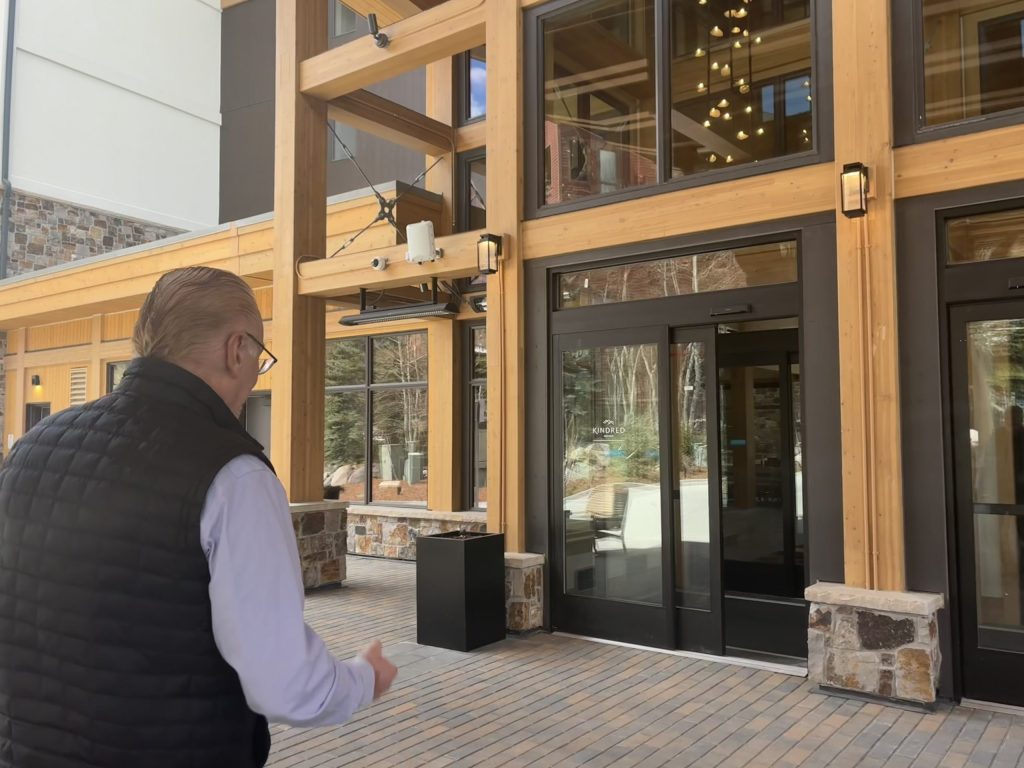
Dohner said Kindred was designed to draw people in rather than keep them out. Much of the resort will be open and accessible to the broader public, including an expansive patio, three restaurants and a bar in the lobby. The location at the foot of Dercum Mountain — home base for Keystone Resort — provides prime real estate for Kindred. Dohner said the resort will likely become a major hub for locals, out-of-town skiers and hotel guests alike. 

“It’s designed for skiers to come off the mountain — not just for guests — to come up and enjoy this area,” Dohner said while standing between firepits and yard games on the main patio. “It’s for everyone.” 

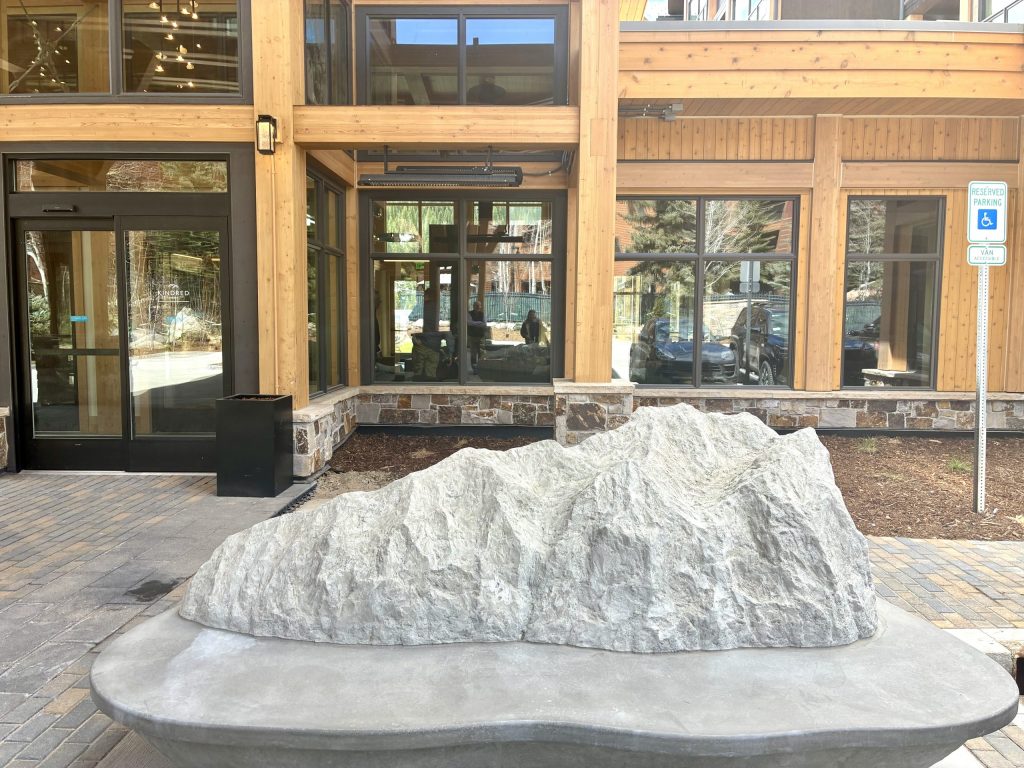
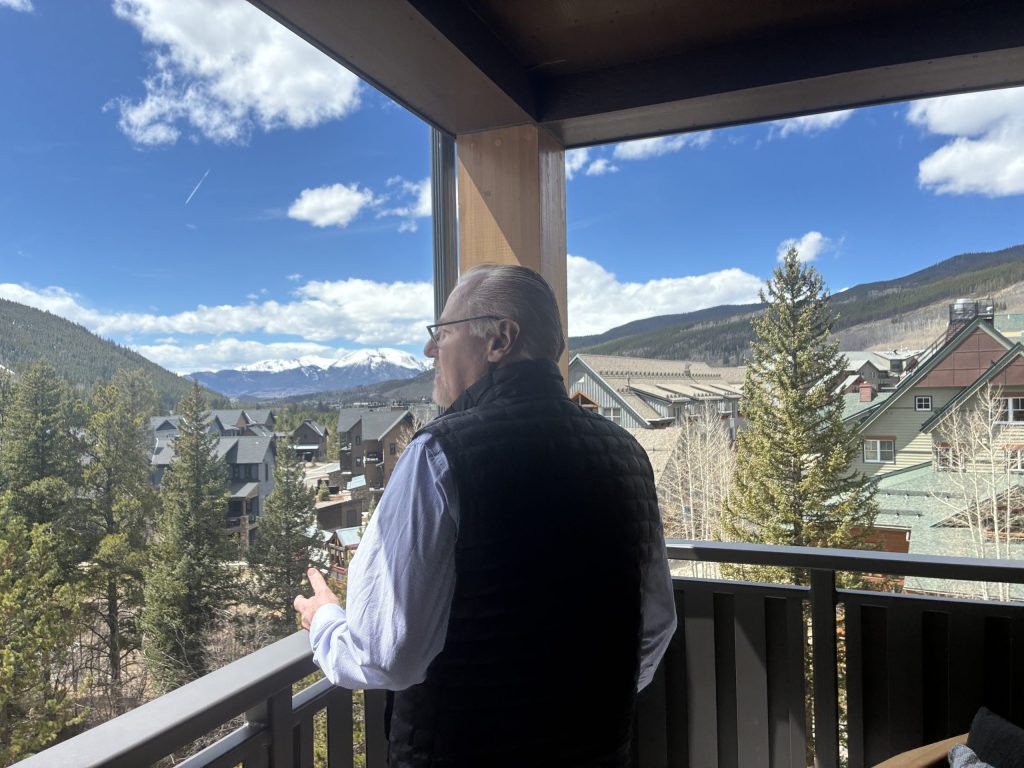
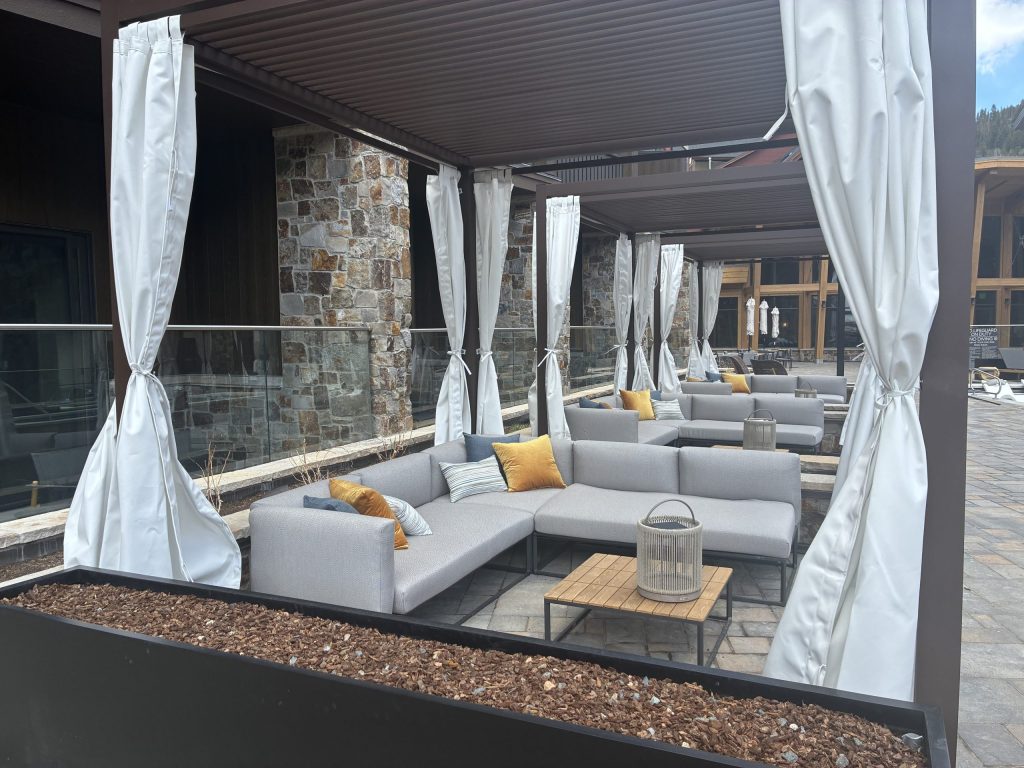
A sprawling patio just steps from the gondola sits at the center of the resort, accessible through the main lobby or via a “grand staircase” rising from the base area. Already, the space features nearly a dozen fire pits, lawn games like cornhole and jumbo chess and sweeping views of the surrounding mountains, wetlands and the Snake River. 

Just over the last week, the patio has already been put to public use. 

“Since we dropped the fences a week ago, there’s been a constant stream of people up here playing the games,” Dohner said.

Plans call for additional amenities, including a mobile bar, upscale s’mores fixings and occasional live music — further positioning the patio as an apres-ski and summer social space. 

The resort’s bar and three restaurants will also be open year-round to the public, an opportunity Dohner said is both unusual and important for the local economy, which has historically relied on ski season to generate sales tax revenue. 

Among the restaurants on site is Lula’s, built on the former homesite of Lula Myers, a well-known local teacher in the early 1900s remembered for her hospitality and culinary talent. The resort will also house Goodz Tavern, Kinji Sushi and a bar called Kindred Spirits.

“We are really set to be the center of Keystone, and we believe that we’ll help drive more activity,” Dohner said. “Absolutely nothing like this has happened in the area, like, ever.”

Dan Dohner, general manager at Kindred Resort, stands atop the “grand staircase” that leads skiers and guests straight from the River Run Gondola to the resort’s public patio. The resort officially opens to the public on May 7.
Allison Moore/Summit Daily News

Kindred staff aiming to deliver five-star service at four-star hotel

Inside, Kindred leans heavily into what Dohner calls a storytelling-driven design philosophy. 

“The developers put a lot of intention into the whole design,” he said. “When they walk in, we want them to have that ‘wow’ moment.” 

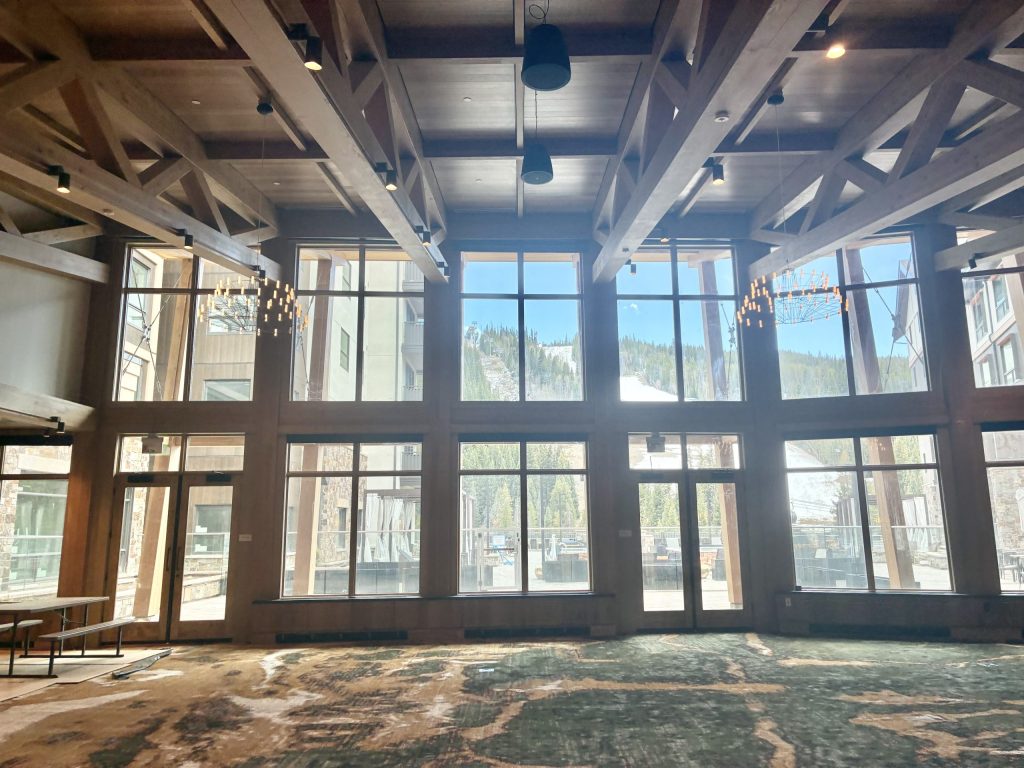
Guests entering the lobby are greeted by high wood-paneled ceilings, cozy seating areas and carpeting designed to resemble a topographical map of Keystone. A wall lined with windows opens to views of the patio, ski trails and surrounding wildlife. Metal and wood touches throughout the property are meant to resemble the feel of old mining towns — “well, a really fancy mine,” Dohner said.

Three 52-foot-tall towers comprising the resort — two for condos and one for the hotel — are intended to mimic the three mountain peaks featured in the Kindred logo. 

At full operation, the resort will book out 107 hotel rooms managed by RockResorts, 95 private residences, a membership-only Alpine club, a spa and salon, fitness center and over 10,000 square feet of meeting and event space. 

Dohner referred to the property as a “four-and-a-half-star hotel.” He said while Kindred is technically classified as a four-star resort based on its services, it intends to function like a five-star hotel. 

The resort already employs around 100 staff members and Dohner expects that to grow to around 140 when fully operational. 

“We’ve got a really good team here, and we’ve really had time to refine our staffing so that when guests are here we’re more than prepared,” Dohner said. 

Delayed opening tied to environmental factors, finishing design touches

Kindred’s official opening date comes months later than initially planned, following a series of delays that pushed its debut from summer 2025 to winter, and now to spring 2026. 

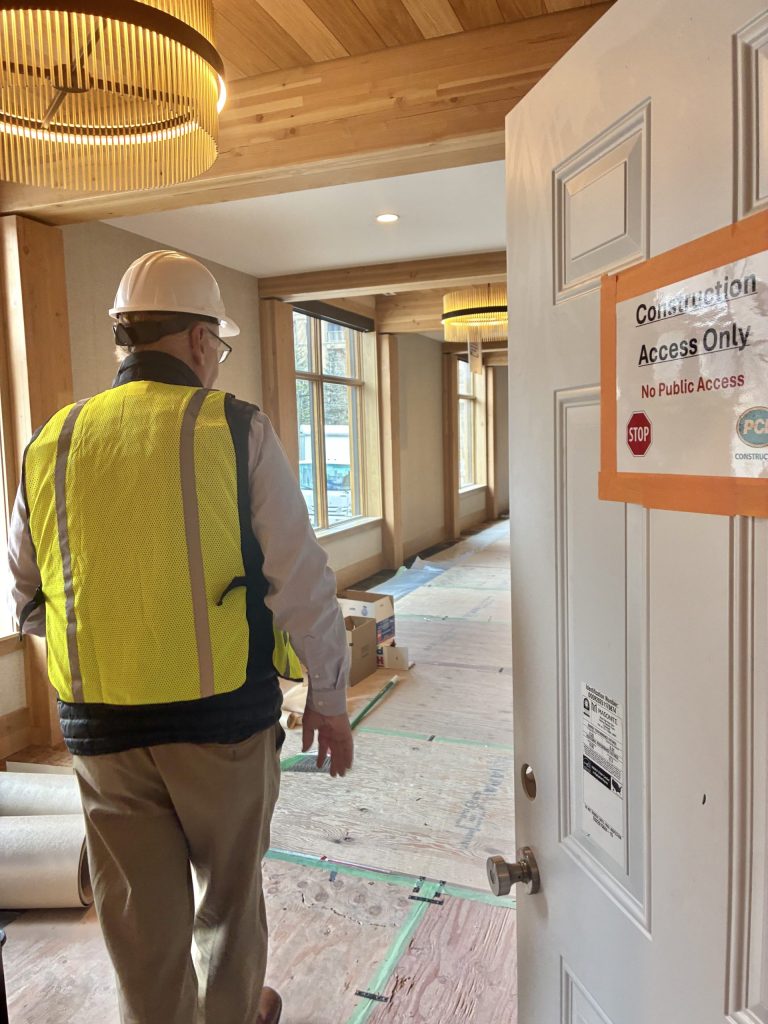
Dohner said those delays were driven largely by a desire to meet high standards rather than rush to open. Pointing to minor imperfections still being addressed during a recent tour of the property with Summit Daily News — like small chips in the paint down the first-floor hallways — Dohner said the team opted to take extra time. 

“In a normal hotel, that would probably be acceptable, but we wanted it just right,” he said. 

Construction challenges were also amplified by the resort’s high-Alpine location.

“When you’re building at 9,000 feet, things come up,” Dohner added.

The resort has gone through more than four developers since the land was acquired nearly 14 years ago. OZ Architecture, Kindred’s current developer, has remained with the project since 2024. 

Despite the delays, Dohner said the project continues to generate strong demand. All but seven of the resort’s 95 residences have already been sold and early interest in bookings has been steady. Once the restaurants open, Dohner said he expects reservations to flood in.

The roughly $300 million development transformed what was once a dirt parking lot into what Dohner imagines as Keystone’s next central gathering space. The resort is opening almost three years after residents voted to approve the incorporation of Keystone as a home-rule town. 

In the coming months, the resort will announce “sneak peek” opportunities for residents to view the amenities inside.

Breckenridge solidifying permitting and fees for e-delivery service downtown

Breckenridge Town Council approved a new permitting and fee structure for its voluntary e-delivery program, marking a transition from a pilot program to an ongoing local service aimed at reducing truck traffic in the downtown core. 

The program, part of the broader Blue River Pathways Project, is designed to improve public safety, reduce traffic congestion and cut emissions by centralizing freight deliveries at a dock facility at 480 N. French St., just south of the City Market complex. From there, goods are transferred to smaller, low-speed electric carts operated by 106 West Logistics, which contracted with the town in November 2024, for the “last mile” of delivery. 

Council unanimously approved an updated ordinance outlining the e-delivery permitting and fee process during a first reading Tuesday, April 14. A second reading and public hearing is slated for the council meeting April 28. Once adopted, the town plans to open applications for delivery permits in August and begin issuing them in October. 

Jessie Burley, sustainability and parking manager, said the approach addresses longstanding challenges tied to Breckenridge’s downtown street layout. 

“Our streets are narrow,” Burley said. “We are trying to encourage pedestrian walkability — mobility outside of cars and delivery trucks — in addition to the other traffic on Main Street.” 

Burley pointed to a cluster of photos on a projector slide showing semis and large delivery vans stuck along the edges of snow-packed downtown streets. 

Since launching the e-delivery pilot program a year and a half ago, Burley said, the downtown core has become much less congested with restaurant delivery vehicles. 

“We have removed the delivery trucks off of the street, primarily to a centralized dock facility, and then we do the last mile of delivery in small, slow-speed vehicles with better visibility that can navigate our streets better,” Burley said. 

A large food delivery truck obstructs traffic along a downtown Breckenridge street. The town’s e-delivery program has already removed around 2,500 large trucks from Breckenridge’s town core.
Town of Breckenridge/Courtesy photo

Burley said the program aims to improve public safety by minimizing conflicts between large trucks, pedestrians and other vehicles, while also reducing truck idling times along Main Street. The need for such a system has grown more apparent in recent years, as Breckenridge’s historic streets — many originally laid out during its mining era — have struggled to accommodate increasing visitation and multiple modes of transportation. Especially during peak tourism periods, large delivery trucks operating in tight corridors can pose significant safety concerns, Burley said. 

According to data compiled by Sustainable Breck, the e-delivery program has already removed over 2,495 large trucks from downtown streets, facilitated the delivery of over 482,000 products and provided more than 15,200 hours of curb space relief. Estimates also report a reduction of approximately 84,370 pounds of greenhouse gas emissions.

Council member Steve Gerard commended the program for aligning with several of the town’s long-term priorities.  

“It really hits a lot of our goals with sustainability and clean air and safety issues,” Gerard said. 

As the program becomes a more permanent fixture of Breckenridge’s transportation system, the updated ordinance establishes a permitting system and annual fees for distributors who choose to participate. While the use of the e-delivery system will remain voluntary, distributors who opt in will be required to obtain a permit and pay a fee based on their level of system use. (Distributors, rather than restaurants and bars, will have the opportunity to opt into or out of the program.)

Council landed on a tiered fee structure, with permit costs determined by factors like delivery frequency, number of locations served, unloading time and truck size. Larger distributors with greater operational impacts will pay higher fees. 

At a work session March 23, town officials reviewed a point-based system that mimics 106 West’s first-of-its-kind e-delivery system in Vail. Compared to Vail’s model, though, Breckenridge’s policy includes an additional fifth tier at a 30% higher annual rate. 

Each tier and assigned annual rate corresponds to the number of permit points logged:

  • Tier One: Fewer than six points, $3,900 per year
  • Tier Two: Six or seven points, $15,600 per year
  • Tier Three: Eight or nine points, $23,400 per year
  • Tier Four: 10 or 11 points, $35,100 per year
  • Tier Five: 12 or more points, $45,500 per year 

The e-delivery program’s 2026 operating budget sits around $1.54 million, with only $175,000 currently budgeted in revenue. If all 17 distributors already participating in the program continue to do so under the proposed fee structure, the town anticipates generating over $295,000 annually, covering just under 20% of operating expenses. 

Council member Jay Beckerman, also a local restaurateur, asked about outreach to local businesses, particularly restaurants that rely on frequent deliveries. 

“Have you gotten anything out to the restaurant community to preempt some of the discussion that might be propagated by the vendors who want to try and do a PR campaign of their own?” Beckerman asked Burley. 

Burley said she attended the most recent Breckenridge Restaurant Association meeting and based on feedback from members, she will soon be providing a document with frequently asked questions about the program to provide additional clarity. 

Beckerman also asked whether enforcement of the e-delivery permit system would coincide with increased enforcement of designated delivery zones downtown. Burley confirmed that both will be enforced, but she noted that delivery zone permits fall under the town’s separate model traffic code.Burley added that in the fall — town budgeting season — the town may need to “increase the fees to cover the cost of enforcement and maintenance of” the existing delivery zone permit program.

Blue River sends reminder on ‘significant overhaul’ of short-term rental regulations

“Significant noncompliance issues” in the short-term rental community in Blue River prompted the town to remind folks of its policies passed in November 2025 that took effect in 2026.

A town newsletter explained the changes were a “significant overhaul” of regulations, and noncompliance could result in financial penalties or the suspension or revocation of short-term rental licenses.

All short-term rental properties in Blue River must have an active license, which cost $300 at the base level and increases by $300 per bedroom. For example, a four-bedroom rental would cost $1,500.

In 2027, the town will enforce a strict “one owner, one property” rule. Any individual cannot hold more than one license or interest in multiple licenses within town limits. Violations could result in revocation of all licenses for a period of 18 months.

All short-term rentals must include the town’s license number, proper occupancy limits and a statement of parking spaces available on the property, which cannot exceed five spaces, in their hosting platform’s listing, such as Airbnb or VRBO. The URL for all listings must be sent to the town.

The town also implemented occupancy limits that allow two guests per bedroom, plus two more additional guests. A two-bedroom unit would have a max occupancy of six guests, while a three-bedroom unit would allow eight guests.

All properties must also provide lodging tax reports and payments for the first quarter of 2026 and any delinquent payments from 2025. Hosting platforms don’t remit these taxes to the town.

Short-term rentals cannot have outdoor wood-burning fires of any kind on the property, and any outdoor fire activity must be limited to gas-powered appliances with an automatic shut-off timer.

The town is also requiring each property to post a specific notice on the entry door and counter of a primary kitchen that covers contact information, quiet hours, trash and recycling info, parking restrictions, fire restrictions, water conservation and any other information deemed necessary by the town.

With roughly 20 open business spaces, Dillon Town Council shows support for new business incentive programs

The Dillon Town Council discussed potential new business incentive programs at its April 14 work session. The programs would look to provide financial assistance to businesses in the town core.

Proposed programs would offer a maximum of $15,000 per project and include facade or storefront improvement, vacancy activation, tenant improvement and relocation assistance. Town manager Nathan Johnson said the selection of programs is based on what other urban renewal authorities offer as business incentives.

“Right now, we have approximately 20 open business spaces that we could try to do something here yet this year,” Johnson said.

Johnson said staff originally intended for the programs to use funds from the Dillon Urban Renewal Authority, but after legal review, some of the programs would not be eligible. A staff memo stated the total annual cost would be $50,000-$100,000, depending on program performance.

Facade improvement grants would help fund exterior improvements like signage, windows, lighting, paint and outdoor seating, according to the memo. Vacancy activations would help fill vacant commercial spaces with pop-up retail, seasonal businesses, art installations or food kiosks that operate for three to 12 months. Tenant improvement grants would help with minor interior buildouts, code compliance, and improvements to flooring, fixtures or layout for businesses with two- to three-year leases. The relocation assistance grants would help offset expenses for businesses moving to or within the town core, or the area within and around La Bonte Street, Buffalo Street and Lake Dillon Drive.

Mayor pro-tem Joshua Samuel said business incentives seem like a missing part of the town’s urban renewal authority. He said the authority currently does not have anything to encourage businesses to improve or anything to help them relocate if new development displaces them.

“It’s important that businesses and residents that might be in these facilities (being redeveloped) get assistance in order to facilitate a fairer process,” Samuel said.

Council member Barbara Richard voiced support for the idea, adding that she has heard of towns having restaurant-specific assistance. Richard said programs like leasing assistance, where the town would pay an annually decreasing percentage of a restaurant’s rent, could help it bring restaurants to specific areas.

“The community keeps saying ‘restaurants, restaurants, restaurants,'” Richard said. “Now remember, we do have a lot of restaurants. We do have over 30, but people want ones that they can walk to (in the town core).”

One such restaurant leasing assistance program on the Front Range had a “decent success rate,” Richard said, with 60% of restaurants involved still operating six years after opening.

Council members Rachel Tuyn and Kyle Hendricks indicated support for the proposed programs before Richard suggested the program may need more financing than proposed. Samuel responded that the proposal is “a good starting point,” and the town could expand the program in the future if needed. 

Samuel said the relocation assistance funding may need to be adjusted in the future to be based on percentages of costs incurred by businesses. He also said the facade and storefront improvement program is “very similar” to a downtown redevelopment agreement Longmont uses to support local businesses. He asked Johnson if staff could reach out to Longmont to learn more about its program, and Johnson said yes.

When Samuel asked the council if they would like staff to continue developing the business assistance proposal, the members responded affirmatively. 

Richard then brought up a related topic listed on the meeting budget about Dillon leasing town-owned buildings to businesses. She said the idea would be to find short-term tenants for buildings, like the one that formerly housed Pug Ryan’s Brewing Co., that the town has purchased with the intent to redevelop.

When Richard asked how the town could fill the spaces, Johnson said the “sky’s the limit” and it would depend on what exactly the Town Council wanted to do. Hendricks questioned what sort of business would want a temporary space, and Tuyn said the town would need a better idea of when the buildings will be demolished before it offers anyone a lease.

Richard said that conversations with Colorado Mountain College leadership have indicated redevelopment will not start for 12-18 months. The town has an intergovernmental agreement with the college to develop a new campus, likely on the old Pug Ryan’s property and nearby lots. Richard also said that local artists have expressed interest in renting temporary space for co-ops.

“They’re used to running booths, and they’re used to running (ones) at the farmers market,” Richard said. “It isn’t that hard to set up (temporary) spaces. I do think if we wanted to pursue it, we’d have to put some energy behind it. It might be possible.”

Town attorney Douglas Stallworthy said it may be difficult to rent the spaces because the town would need to perform further inspections, and possibly maintenance, on the buildings first. Stallworthy said an idea Richard proposed of having a temporary restaurant in the Pug Ryan’s building would be especially difficult, as it can take significant time and money to prepare a commercial operation for leasing.

Council member Linda Oliver suggested the town make use of the grass lawn in front of the Pug Ryan’s building by setting up tables and chairs and allowing food trucks to operate in the area. Stallworthy said the feasibility of that idea would be a question for the planning and zoning commission.

Nearly 100 Colorado businesses have left or scaled back operations since 2019, report finds

A new report from the Colorado Chamber Foundation suggests the state’s weakening competitiveness is driving businesses out of state. Companies are blaming factors like increasing regulations and cost of living for why they’re choosing to leave.

Roughly 98 companies relocated or moved business operations to other states between 2019 and 2025, resulting in the loss of over 13,600 jobs from Colorado, according to the Colorado Chamber Foundation’s Relocations Tracker. Twenty-seven of these occurred in 2025.

The tracker, released in April, compiles data on corporate decisions to reduce operations in Colorado or to relocate or expand operations out of state. This can include relocating the company’s headquarters, moving critical facilities and scaling back Colorado investment in favor of other states.

While the tracker cannot include every single company that has left Colorado, the report authors say the data — taken from public reports like corporate press releases and quarterly financial statement filings — provides a big picture of movement trends in the state.

“While Colorado has significant strengths as a state, we are also becoming increasingly vulnerable in our competitiveness and are seeing a slow burn of companies looking elsewhere to invest and grow,” Foundation Executive Director Rachel Beck said in a news release. “This report highlights that certain policy approaches are creating a less favorable business climate in Colorado, and we’re starting to see this become a factor in corporate relocation and expansion decisions.”

Texas is by far the largest recipient of Colorado businesses, attracting 21 companies for expansion or relocation over the past six years, and seven companies in 2025. One company, Teachers Insurance and Annuity Association of America, moved roughly 1,000 jobs to Texas in the last three years.

California has acquired the second largest number of Colorado companies, 10, followed by North Carolina and Arizona with six companies each.

The chamber’s analysis of federal financial reports also found that Colorado has experienced a net loss of 34 public company headquarters since 2022. In 2025, Colorado claimed its fewest public company headquarters in the last six years.

While the annual number of business relocations out of Colorado dipped slightly from 14 in 2019 to six in 2022, it spiked to 27 per year by 2025, according to the report.

Of the companies that have sought opportunities in other states in 2019, 54.5% have left the state completely, leaving 33.3% with some presence in the state, even if those companies moved their headquarters or facilities out of state. The other 12% were lost due to a lack of corporate attraction.

“We now have 34% (of businesses) indicating they are not likely to make investments in Colorado — this is up from 25% last year. Among those already working in other states, this hits 41%,” Colorado Chamber Pollster Pat McFerron wrote in the report.

A report from the Colorado Chamber Foundation points to challenges like overregulation and cost of living for why fewer companies are choosing Colorado for expansion and investments.
Courtesy/Colorado Chamber Foundation

Companies leave for more favorable business climates

In 2022, the Colorado Chamber of Commerce released a Colorado Competitive Landscape Report, which found that state-level policies have driven this corporate exodus.

Concerns over excessive regulations were further confirmed by a 2024 study, which identified Colorado as the sixth most regulated state in the country, with more than 205,000 regulations on businesses.

The Colorado Chamber’s priority legislation, Senate Bill 137, would create more robust standards for how state agencies review existing regulations. The bill, characterized as an avenue to restore some of the state’s competitiveness, had its second reading in the Senate on April 10.

“This data confirms much of what we’ve been hearing from the business community; our regulatory climate is becoming increasingly burdensome and driving companies out of state,” Cynthia Eveleth-Havens, chief strategy officer and senior vice president of communications for the chamber, said in the release. “These trends present a real risk to our workforce strength, future job growth, capital investment and Colorado’s overall economic vitality.”

Further research from the chamber revealed that, on top of the impacts of overregulation on the state’s competitiveness, other business metrics like the cost of doing business and cost of living have also hurt Colorado’s appeal to companies and investors. Companies largely blamed a combination of tax and regulatory policies, talent pool availability and other states having more favorable business climates.

Matt Joblon, CEO of BMI Investments, told the chamber in their 2022 Competitive Landscape Report that the cost of living on the Front Range has driven some of its potential workforce to move out of state, making it more difficult for businesses to find qualified candidates to employ.

“More and more people are leaving metro Denver because of the cost of living,” Joblon said in the report. “This is causing the talent pool to tighten as people and quality talent are driven out of the state. The next shoe to drop is corporations leaving because they cannot find the talent to support their businesses.” 

Making a ‘life dream’ come true: Sisters launch Second Life Thrift Store in Dillon

After nearly 30 years in Summit County, sisters María and Elizabeth Veleta just began their lifelong dream. 

Since the pair opened Second Life Thrift Store at 130 Main St. in Dillon, their inventory of donated clothes, accessories and household items has almost doubled. The sisters said they’ve already been overwhelmed by the support from the community. 

“My mom, she’s always wanted to put a store up — like a life dream for years — but it’s not always easy to make it work,” said Alex Veleta, María’s son, explaining why she grew emotional when asked about what led her to opening a secondhand clothing store. 

The Veletas recalled the financial struggle they endured when they first arrived in Eagle County over 25 years ago. María Veleta said at the time, she could only afford discounted clothing at local thrift stores. 

“When we came here first to Eagle County, we came with nothing,” María Veleta said in Spanish. “The only places I shopped were thrift stores, and I always enjoyed them because they always had something different, and cheaper.”

Once they moved into Summit County, the sisters frequented a thrift store open in Dillon at the time. María Veleta eventually worked there for a few years before it closed. Afterwards, she and Elizabeth Veleta began searching for storefronts around the county where they could finally curate, design and run their own business.

Quickly realizing that rent closer to downtown Dillon or Silverthorne was too steep for their budget, María and Elizabeth Veleta said they were overjoyed to find a more affordable location at their current spot along a strip of Main Street near other retail establishments. 

At Second Life Thrift Store, co-owners and sisters María and Elizabeth Veleta said they plan to accept as many donations as they can fit inside the store.
Allison Moore/Summit Daily News

The sisters said they had fun laying out clothing racks, leafing through bins of old T-shirts and dressing up mannequins in sequined blouses. 

“Yes, it was so fun, we (went) through so many old clothes and figured out how to map out the store,” Elizabeth Veleta said. 

The Veletas partially credited Buffalo Mountain Print and Supply for the ease of setting up shop. The apparel store provided Second Life Thrift with hundreds of hangers, wall shelving and clothing racks, insisting the Veletas not pay. 

“Yeah, really huge shoutout to them,” Alex said. 

The Veletas remain committed to providing affordable clothes for working residents of Summit County. Alex Veleta joked that he and his cousins have encouraged María and Elizabeth to raise prices on certain items (like never-worn Columbia jackets), but the sisters always refuse. 

“Even us cousins yell at them, like you could charge way more. But my mom and my aunt, they’re always like, it’s supposed to be affordable — that’s the point of a thrift store,” Alex Veleta said. “They don’t see the point in overcharging people.” 

With the help of Alex’s cousin, Junior, María and Elizabeth operate the store seven days a week from 10 a.m. to 6 p.m. Elizabeth runs the store in the mornings before going to work at Taco Bell. That’s when Maria takes over, following her morning shift as a housekeeper around the county. 

“Many people get rid of their clothes, and we thought we could help with that,” María said. “We see the support from people in the community, and we want to support them.”

Second Life Thrift Store at 130 Main St. in Dillon operates seven days a week from 10 a.m. to 6 p.m.
Allison Moore/Summit Daily News

As Pug Ryan’s closes, this summer’s plan for Dillon’s tiki bar shifts

Fifty-one years after opening its doors, Pug Ryan’s Brewing Co. closed Sunday, April 5. The closure comes after the Dillon Urban Renewal Authority voted in February to purchase the brewery at 104 Village Place.

Pug Ryan’s had operated the tiki bar at the Dillon Marina since 2011, but the Town Council selected a new concessionaire, the Keystone Coffee Co., in February in anticipation of Pug Ryan’s tiki bar contract expiring in November 2026. Keystone Coffee Co., which operates several restaurants in Keystone and Breckenridge, was not supposed to start operating the tiki bar until summer 2027.

With Pug Ryan’s closing due to the town’s purchase of the property, town manager Nathan Johnson wrote in an email that the owners of Keystone Coffee Co., Justin and Elissa Slezak, agreed to move up their takeover of the marina restaurant to summer 2026.

According to the Slezak’s February pitch to the town, its owners intend to serve breakfast, lunch and dinner at the tiki bar. The Slezak currently run Steep Brewing and Coffee Co., a two-location business that roasts fresh coffee and brews craft beer; Snowbird Cafe and Bistro, which serves fried chicken, waffles, wings and more; Breckenridge Coffee House; and Breckenridge Coffee Roasters, which is a coffee wholesaler.

A Facebook post announcing Pug Ryan’s closure thanked the brewery’s “loyal guests, dedicated staff, and supportive community.”

“What began as a simple dream grew into a place filled with laughter, stories, friendships, and unforgettable memories,” the post stated.

Dillon staff memos about the town purchasing the Pug Ryan’s property, as well as nearby 105 Village Place, stated the town has been working with Colorado Mountain College to explore “future possibilities.” The Town Council, which has the same members as the renewal authority board, passed an intergovernmental agreement with the college at a meeting the same night as the renewal authority’s vote to purchase the properties.

Economic jitters prompt Breckenridge Town Council to reconsider its financial outlook

Editor’s note: This story was updated to correct the name of the finance director in Breckenridge.

Citing fears that an impending dry summer will further erode sales tax revenue, Breckenridge town officials requested another review of the town’s annual budget. 

Following a financial report at a meeting Tuesday, March 10, council member Dick Carleton said he wanted to revisit financial projections for the remainder of the year, anticipating potentially more of an economic downturn than initially expected. 

“I feel a need to be more conservative in our forecast,” Carleton said. 

Carleton requested town finance staff return to a council meeting before the summer — when next year’s budgets must be approved — with five-year market projections that he believes would more accurately predict market trends. Carleton said both national and local economic trends worry him. He suggested the council consider further reducing town operational expenses and consider investing in projects that bolster sales tax revenue. 

“I’m personally becoming increasingly concerned with the economy going forward nationally, as well as the resort and ski town economy locally,” Carleton said. “I’m becoming increasingly more uncomfortable with these numbers. … I feel a need to reduce expenses and create some room to invest more on the revenue side.” 

Finance director Laura MacInnes said reports from January and February show Breckenridge’s 2026 revenue forecast remains in line with last year’s estimates. 

“So far, two months in, I think we’re going to be okay, but I think there’s a lot of unknown,” MacInnes said. 

MacInnes agreed to return to council again with five-year projections using that more recently collected data. She noted the town’s operational budget sits at around $35-36 million.

“It is important for us to talk about what’s in the operational expenses, because that’s our general fund budget, which is essentially what we run the town on.”

Carleton again suggested the council reconsider its upcoming operational budget as soon as possible. He said he feels a pressing need to ensure the town’s budget will allow it to remain competitive with other tourism and resort economies in the region. Given that this year’s historically warm winter has already hampered Colorado’s tourism industry, Carleton said the town should consider reconfiguring its upcoming budget to permit more investments in tourism and guest experiences. 

“I’m feeling a great urgency to take a look at it,” Carleton said of the town’s upcoming annual budget. 

“I think we need to make some investments in guest-facing capital expenditures,” he said. “We haven’t done a lot to increase the guest experience in years, and I’m afraid if we keep sitting back, we’re going to lose market share.” 

Distributor test only news and home

This should only send the terms: News category and the home tag.

Dillon Town Council declines to renew Uptown 240 development permit, continuing uncertainty around stalled condo project

Editor’s note: This article has been updated to correct the breakdown of the Dillon Town Council vote.

dev test for characters start here

Highlight Problematic Characters

This tool highlights characters that might cause issues, such as “curly quotes”, ‘smart apostrophes’, ellipses…, em—dashes, and other non-ASCII characters like € or ©.

It also shows invisible characters: Tab here, Newline and a non-breaking space, zero-width​space, and BOM.

Regular ASCII text like 123 abc !@# should not be highlighted.

Another sentence with a “smart quote” and a regular “dumb quote”.

end dev test here

Dillon Town Council voted Tuesday, Aug. 15, to not extend an expired development permit for a partially constructed 80-unit luxury condominium complex in the town core.

The decision, which split the council 5-2, throws a potential wrench into bankruptcy proceedings involving Uptown 240, the embattled company behind the project. Uptown 240 requested the extension through their attorney in an effort to maintain the property’s value, Dillon Town Attorney Nick Cotton-Baez said.

“If the development permit is not extended during the bankruptcy proceeding, the project value may plummet, thus significantly diminishing the sums available for repayment (of) creditors,” Cotton-Baez wrote in a memorandum to the council.

That effect of council’s decision on Uptown 240 remains “an uncertainty,” Cotton-Baez said. Uptown 240 President Danilo Ottoborgo nor an attorney representing the company responded to emailed questions about the impact of the decision before Summit Daily’s publication deadline Wednesday.

Since the original financiers behind Uptown 240 backed out during the pandemic, little progress on the project has been made beyond pouring a foundation. Construction was supposed to resume in November 2020 and again in February 2021 but never did. Then this past February, Uptown 240 filed for bankruptcy the day before a scheduled foreclosure auction.

Uptown 240 President Danilo Ottoborgo told the Town Council in May that the company had been “surprised” to learn that the building permit — and with it the rights to construct the planned 80-unit luxury condo complex — expired at the end of April.

Through Chapter 11 bankruptcy proceedings, Uptown 240 has proposed two paths forward: refinancing and completing the project or selling the property at a bankruptcy sale scheduled for next month.

Both those options are intended to maximize returns for creditors, Cotton-Baez wrote, but the expiration of the development permit may affect Uptown 240’s ability to refinance or sell the property.

“The matter of the development permit expiration has become a critical issue of the bankruptcy proceeding, as the development permit and property entitlements are primary drivers of the project’s value, and thus crucial to the intent of maximizing returns to creditors,” Cotton-Baez said.

The town of Dillon is a creditor, Cotton-Baez noted, as are those who paid deposits on the unbuilt units, many of whom are Dillon residents.

Town Manager Nathan Johnson said in an email that the town is a creditor because it is owed past-due water charges and other fees Uptown 240 is responsible for under its development agreement with the town.

“I think the resolution has become a necessary and appropriate step here,” Town Council member Brad Bailey, who voted in favor of the extension, said.

Bailey said that the development permit should increase the value of the property because potential buyers may be more interested in a shovel-ready project than having to start the expensive and time-consuming planning process from scratch.

“It’s much easier that way, much faster, and it’s certainty,” Bailey said. “They know they can build. If they come back to us, they have no idea it’s going to be approved. That puts timing, dollars, financing in jeopardy.”

Council member Kyle Hendricks, who voted against the extension, noted his long opposition to the project and questioned why Uptown 240 representatives didn’t attend the meeting Tuesday.

“I would have expected to see (Uptown 240) here arguing for themselves tonight, arguing for themselves or for their investors — just out of respect, dignity,” Hendricks said. “So I would not like to see this project go any farther.”

Still, other council members raised concerns that Uptown 240 had promised several times over the years that it would complete the project.

“I don’t think this is in the town’s best interest,” council member Renee Imamura said. “I think this is holding the hand of the Ottoborgo family, and they’ve had three years to do this. I don’t think it’s going to devalue the property.”

Still, while some council members said they are not willing to extend the development permit for Uptown 240 right now, they could be interested in extending it for another developer who comes into ownership of the property in the future.

“It might be worth relaying to maybe not the current developer but to the bankruptcy court that should there be a sale that there is probably a willingness to extend the development permit at that time,” Mayor Carolyn Skowyra, who voted against the extension, said.

Cotton-Baez warned, however, that not extending the development permit for Uptown 240 but extending it for another developer could raise legal questions. He opined that the council might be able to legally do that if they had a reasonable basis for making that decision.

“If you were to act in that way, it would open you up to lawsuits,” Cotton-Baez said.

Skowyra asked, “Is it reasonable to say for three years (Ottoborgo) has been telling us he’s about to close on a loan and has given us — I can think of probably three specific deadlines that we’ve seen come and go where he’s supposed to have financing by that date?”

Cotton-Baez said it is possible that that argument could pass legal arguments. He also noted that there is not a mechanism by which Dillon voters petition to overturn the ordinance, as had been suggested at a meeting earlier in the year.

The bankruptcy court “had no faith that the town council was going to extend the development permit and that was concerning them about the value and how they might advertise this to potential buyers,” Cotton-Baez added.

Skowyra noted that no matter what decision the council made, much uncertainty would continue to surround the project.

“It was a roll of the dice either way,” she said.