Colorado House passes bill aimed at limiting environmental, cost impacts of Trump’s coal plant orders
Measure would impose new emission controls and cost reporting requirements on plants forced to stay open past their retirement date

Robert Tann Follow
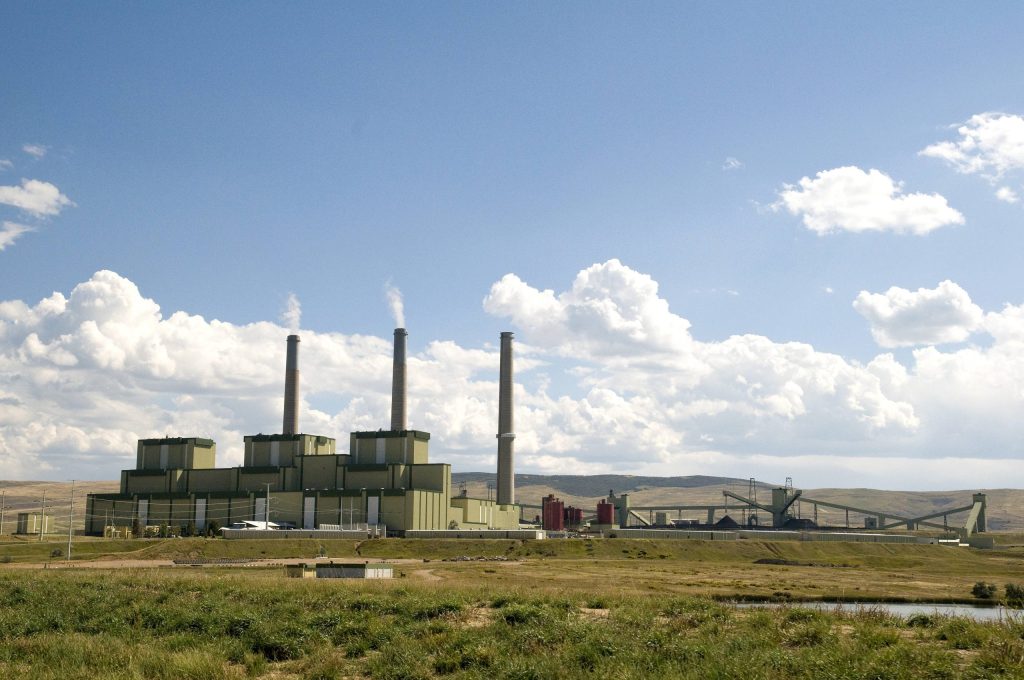
Steamboat Pilot & Today archive
Amid federal efforts to keep coal-fired power plants burning, Colorado Democrats are advancing legislation they say will help mitigate the environmental and cost impacts on communities.
Lawmakers voted along party lines on Wednesday, April 22, to pass House Bill 1226, with 42 Democrats backing the measure and 22 Republicans opposed. The bill now heads to the Senate for more votes.
The measure comes in response to a federal order by President Donald Trump’s energy department late last year that prevented the scheduled closure of an aging coal plant in Craig. Bill sponsor Jenny Willford, D-Northglenn, said legislative action is needed to ensure that those types of decisions don’t derail Colorado’s clean energy goals or push more costs onto ratepayers.
“Over the last decade, we’ve made considerable progress toward our climate goals, and we can’t allow federal overreach by the Trump administration to take us backwards,” Willford said on Tuesday ahead of a preliminary vote on the bill.
Other prime bill sponsors are Rep. Meghan Froelich, D-Englewood, and Sens. Lisa Cutter, D-Littleton, and Mike Weissman, D-Aurora.
Under the bill, coal plants that are forced to stay open past their retirement date due to federal orders would be required to install pollutant controls to limit further nitrogen oxides and sulfur dioxide emissions by 2034, as well as report emission data to the state to ensure compliance. Coal plants would also be required to publicly report the costs and energy output associated with staying open past their original retirement date.
The bill also requires the state’s Public Utilities Commission to approve enough renewable energy development, as proposed by an investor-owned utility provider, to ensure that those providers can stick to the state’s schedule for retiring coal plants.
Additionally, the bill allows utility operators to receive low-interest, state-backed bonds to help pay for keeping their plants online, which proponents hope will help protect ratepayers from shouldering exorbitant costs.
Across the country, the Trump administration has intervened in the scheduled closure of coal plants by using section 202(c) of the Federal Power Act, which allows the U.S. Department of Energy to keep power plants running during times of crisis, such as war or energy shortages.
That was the case for Craig Station Unit 1, one of three coal-fired plants in Moffat County, which was scheduled to close on Dec. 31, 2025. The day before, Energy Secretary Chris Wright issued a 202(c) order requiring the plant to remain open for 90 days due to what he claimed was an energy “emergency” in the region, including a “shortage of electric energy, a shortage of facilities for the generation of electric energy, and other causes.”
The order was extended on March 30 for another 90 days. Because the Energy Department has the authority to keep extending those orders until it deems the energy emergency over, it can keep the plant open indefinitely. Colorado Attorney General Phil Weiser and a coalition of environmental groups are suing the Energy Department, claiming the order is illegal.
Republicans, utility providers react
Much of the debate on the state bill led by Willford and other Democrats centered around the role of coal in Colorado’s energy future, with Republicans defending the industry as a vital component of the state’s economy.
“We’ve seen in Craig and in Pueblo now, as they try to transfer from one type of energy to another, that jobs are impacted,” said Rep. Ty Winter, a Republican from Pueblo, where the Xcel Energy-owned Comanche Generating Station is currently slated to see its last coal-fire plant close after 2030.
Winter also warned that the loss of coal plants in Colorado means “we’re pulling energy jobs out of the economy (and) we’re not able to provide enough energy for companies that want to come in and bring industry.” He called Democrats’ bill a “knee-jerk reaction to some federal issues.”
Willford said she supports efforts to aid coal workers who transition into new jobs, but added, “The coal industry has been shrinking for decades due to automation and market forces, not just policy.”
While coal plant closures have been driven in part by the need for utility providers to adhere to the state’s clean energy goals, other factors include a shift to cheaper renewable energy and natural gas production.
Nonprofit utility providers, such as the owners of the 40-plus-year-old Craig Station, have also faced mounting costs with keeping aging coal plants online. Craig Station Unit 1 wasn’t in operation when it was ordered to stay open last December due to a mechanical valve failure. Some estimates put the cost of keeping the coal plant open for an additional year at $85 million.
Mark Stutz, a spokesperson for Tri-State Generation and Transmission Association, one of the plant’s co-owners, said in an email that Tri-State continues to monitor Democrats’ bill and remain neutral on the proposal.
He added, “It is important for us to ensure that any additional requirements do not unnecessarily add costs to our rural cooperative members.”
Tri-State and another of the plant’s co-owners, Platte River Power Authority, opposed the Energy Department’s 202(c) order and had asked in January for it to be rescinded, warning of increased costs to its members.
Platte River Power Authority did not respond to a request for comment on Democrats’ bill, but during a committee hearing in February, a representative for the utility provider warned that the bill would create more challenges.
Leigh Gibson, Platte River Power Authority senior external affairs specialist, said the bill’s requirement for coal plant operators to install new emission-capturing technology could cost over $100 million over 10 years, which she called not “technically feasible.”
“This would only drive rates up further and for municipal utilities, all costs are passed onto utility customers,” Gibson said.
Lawmakers later amended the bill to push up the implementation timeline for when coal plants would need to install pollutant controls from 2030 to 2034.

Support Local Journalism
Support Local Journalism
As a Summit Daily News reader, you make our work possible.
Summit Daily is embarking on a multiyear project to digitize its archives going back to 1989 and make them available to the public in partnership with the Colorado Historic Newspapers Collection. The full project is expected to cost about $165,000. All donations made in 2023 will go directly toward this project.
Every contribution, no matter the size, will make a difference.